The Geometry of Passage
When a fox moves through deep snow, it does not walk in a straight line; it leaves a series of rhythmic, singular indentations, a trail that functions as a map of its singular intent. This is the biology of movement—a temporary disruption of a pristine surface that will eventually be reclaimed by the next snowfall or the slow thaw of spring. We are often terrified of leaving a mark, fearing that our presence is a stain upon the landscape, yet we are built to traverse. To move through a world that is indifferent to our weight is a fundamental act of existence. We are not meant to remain static, nor are we meant to leave permanent scars. We are simply passing through, our lives defined by the brief, rhythmic impressions we press into the environment before the wind smooths the surface once more. If our journey is merely a temporary indentation, what is the weight of the path we choose to carve?
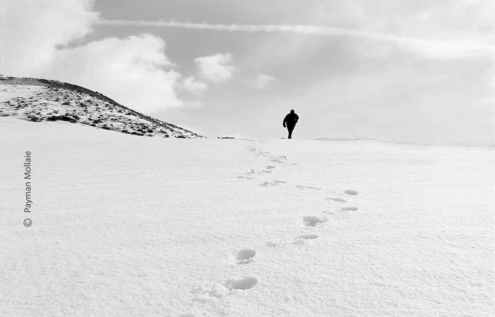
Payman Mollaie has captured this fleeting sense of direction in the image titled Footprints in the Snow. It serves as a quiet reminder of how our individual paths intersect with the vast, silent spaces of the world. Does the trail you leave behind tell the story you intended?