The Geography of the Unseen
We often mistake the city for its concrete skeleton—the zoning laws, the transit lines, and the high-rise glass. But the true document of urban life is found in the margins, in the small, unmanaged patches of earth that persist despite our best efforts to pave over them. These pockets of wildness are the city’s quietest residents. They do not demand our attention, nor do they serve the efficiency of the grid. Instead, they exist as a form of resistance, a reminder that nature is not merely an amenity to be placed in a park, but a persistent neighbor that claims its own territory. When we look at these small, overlooked spaces, we are forced to confront the hierarchy of our own attention. Who decided which parts of the landscape are worthy of cultivation and which are left to the weeds? What happens to a community when we stop noticing the vibrant, messy, and unscripted life that grows right beneath our feet?
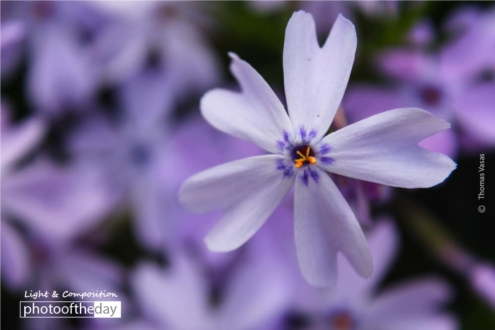
Thomas Vasas has captured this quiet persistence in his image titled In the Purple. By focusing on the intricate life within a backyard, he invites us to reconsider the value of the spaces we often walk past without a second glance. Does your own neighborhood hold similar hidden worlds, and who are they truly for?