
The Geography of Belonging
Cities are often mapped by their infrastructure—the transit lines, the zoning laws, the rigid grids that dictate where we work and where we sleep. Yet, the true map of a city is drawn by the rituals we carry with us. When people migrate, they do not just bring their labor; they bring the sensory architecture of their origins. A recipe, a specific spice, or the vibrant dust of a festival acts as a portable territory, a way to reclaim a piece of the public realm and make it intimate. These small, domestic acts of resistance against the anonymity of urban life are how we transform a cold, concrete environment into a place that feels like home. It is a quiet assertion of identity, a way of saying that even in a globalized metropolis, we are not merely residents of a postcode, but keepers of a culture. Who gets to claim the space to celebrate, and whose traditions are invited to color the gray edges of our streets?
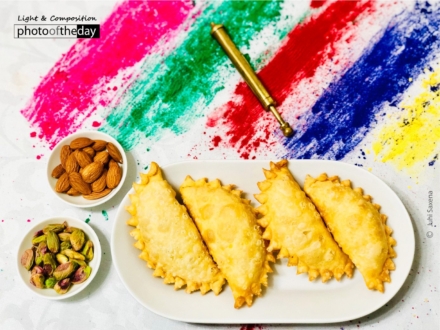
Juhi Saxena has captured this sense of cultural anchoring in her image titled Celebrating the Festival of Colours – Holi. It serves as a reminder that the city is built as much by our shared memories as it is by steel and glass. How do you carve out a sense of home in the place where you live?
 (c) Light & Composition University
 (c) Light & Composition University