
The Edge of Belonging
We often mistake the edges of our cities for empty space, treating the shoreline or the industrial fringe as a void where the map simply stops. But these thresholds are rarely vacant; they are the places where the city negotiates its relationship with the wild, and where the architecture of utility meets the rhythm of the tide. Who built this structure, and for what purpose? Was it meant to facilitate the labor of the sea, or was it an invitation for the public to stand just a little further out, suspended between the solid earth and the infinite horizon? When we look at these liminal spaces, we see the fingerprints of those who claimed the land and those who were pushed to its periphery. A pier is a bridge that leads nowhere but into the deep, a testament to our desire to reach beyond our own boundaries. If the city is a document of our collective life, what does this silent, weathered extension say about who is permitted to linger at the edge of the world?
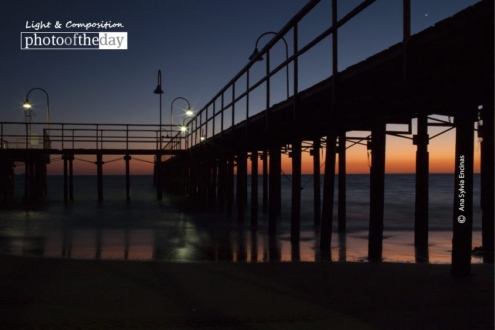
Ana Sylvia Encinas has captured this quiet tension in her image titled An Old Pier. She invites us to consider the geography of this coastal boundary and the stories etched into its wood. Does this structure feel like a welcoming path or a barrier to you?