
The Architecture of the Wild
We often speak of the city as a closed system, a rigid grid of stone and steel designed to exclude the untamed. We draw lines on maps to define where the human ends and the wild begins, as if nature were a tenant we could simply evict from the urban ledger. Yet, the edges of our settlements are porous. Even in the most dense environments, there are pockets of resistance—unplanned, unmapped, and indifferent to our zoning laws. These spaces serve as a reminder that we are merely guests in a larger geography. When we build, we prioritize efficiency and enclosure, but life—in all its forms—seeks out the interstitial spaces, the gaps between our ambitions. We define our territory with fences and walls, but who truly owns the air above or the canopy that persists despite our encroachment? The city is not just a collection of buildings; it is a contested territory where the right to exist is constantly negotiated. If we are the architects of our own isolation, what happens when the wild refuses to be excluded?
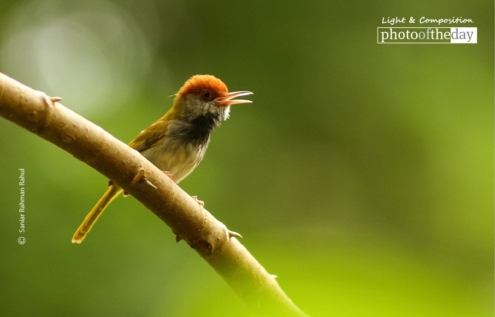
Saniar Rahman Rahul has taken this beautiful image titled Male Dark Necked Tailorbird. It serves as a quiet reminder of the life that persists on the periphery of our human-centric maps. Does this small inhabitant belong to the forest, or have we simply forgotten that the forest belongs to it?