The Architecture of Spectacle
Cities are rarely just collections of concrete and glass; they are stage sets for the stories we tell ourselves about modernity. We build these dense, vertical labyrinths to maximize efficiency, yet we inevitably crave the mythic. When we carve out space for the impossible—for monsters, icons, and symbols—we are admitting that the functional city is not enough to sustain the human spirit. We need the surreal to puncture the monotony of the grid. These urban environments are designed to be navigated, but they are lived in through our projections and our collective imagination. Who gets to define the skyline? Is it the architect, the developer, or the culture that insists on placing its legends atop the rooftops? When we look at the density of a metropolis, we are seeing a negotiation between the rigid demands of capital and the playful, often absurd, desires of the people who inhabit the shadows of those towers. What happens to a city when the boundary between the real and the imagined begins to blur?
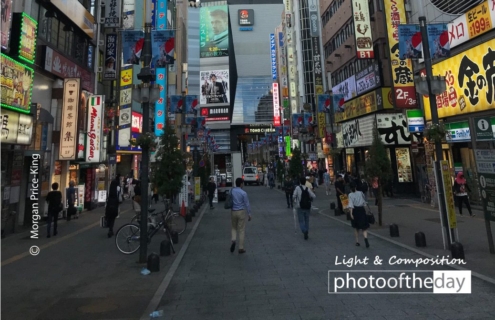
Morgan Price-King has captured this tension in the image titled Shinjuku. It serves as a reminder that even in the most structured urban environments, there is always room for the unexpected to emerge from the architecture. Does this city belong to the people who walk its streets, or to the myths we have built to watch over them?