The Architecture of Solitude
We often mistake the city for its infrastructure—the steel, the glass, the transit lines that dictate the flow of capital. But the true urban document is written in the moments of stillness between the movements of the crowd. When a person claims a corner or a bench, they are not merely occupying space; they are asserting a right to exist within the friction of the metropolis. There is a profound sociology in how we choose to be alone in public. Some seek the anonymity of the masses, while others carve out a private sanctuary amidst the noise, turning a public thoroughfare into a personal living room. This is where the city reveals its true character: in the tension between the individual’s need for reflection and the relentless demand of the urban environment to keep moving. Who is granted the luxury of pausing, and who is pushed along by the invisible currents of efficiency? What does it mean to be at home in a place that is constantly being redesigned to exclude the stationary?
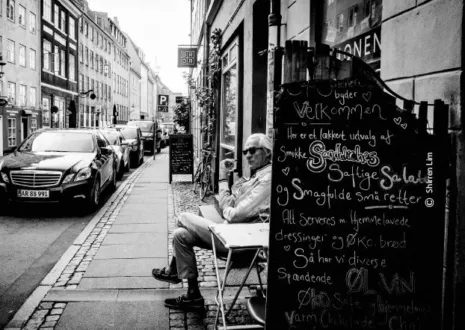
Shirren Lim has captured this quiet tension in her image titled BROR. It serves as a reminder that even in the most structured urban environments, the human spirit finds its own rhythm. Does this space belong to the city, or does it belong to the man standing within it?