
The Architecture of Silence
Seneca once observed that we are often more frightened than hurt, and that we suffer more in imagination than in reality. We walk through the corridors of our own lives, projecting shadows onto the walls and fearing the darkness that gathers in the corners of our own making. Yet, the structures we build—both of stone and of thought—are rarely as impenetrable as they appear. Time, that great equalizer, eventually softens the sharp edges of our industry, reclaiming the concrete and the iron until only the essential remains. There is a profound stillness to be found in the places where human ambition has finally ceased its clamor. When the noise of purpose fades, we are left with the quiet architecture of the present, a space where light does not judge the decay but simply reveals it. What remains when we stop trying to impose our will upon the world, and instead allow the light to find its own way through the ruins?
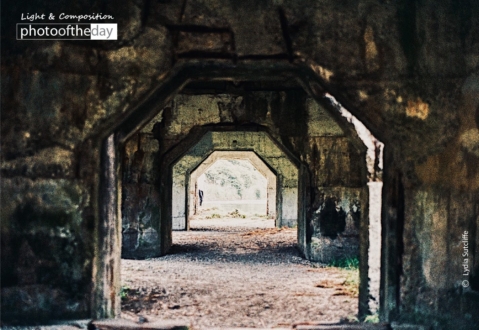
Lydia Sutcliffe has captured this quiet transition in her work titled Light at the End of the Tunnel. It serves as a reminder that even in the most abandoned places, there is a path forward if we are willing to look toward the source of the glow. Does this image change how you perceive the spaces you leave behind?