
The Architecture of Shared Shelter
We often mistake the city for its hard surfaces—the stone, the asphalt, the rigid lines of property and infrastructure. But the true urban fabric is woven from the soft, invisible threads of necessity and cooperation. When the environment turns hostile, the individual is forced to negotiate with the collective. We see this in the way people carve paths through snow, or how they cluster under the meager protection of a shared canopy. These are not merely logistical choices; they are social contracts formed in the moment. Who decides who walks in the center and who takes the edge? Who holds the weight of the shelter, and who benefits from the dryness? The city is a document of these micro-negotiations, a record of how we distribute comfort when resources are scarce. We are rarely as independent as our planners would have us believe, and our survival is almost always a collaborative act of proximity. If the city is a machine for living, what happens to the gears when the weather demands we move as one?
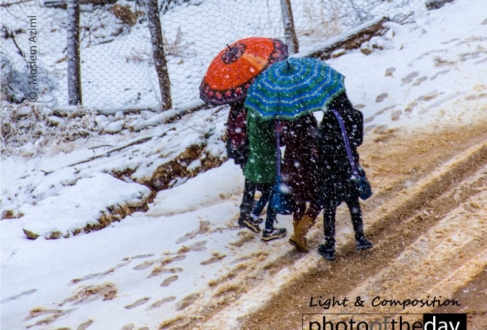
Moslem Azimi has captured this beautifully in the image titled Two for the Four. It serves as a poignant reminder of how human connection reshapes the cold, indifferent geography of a town. How do you see the city changing when people are forced to lean on one another?