The Architecture of Roots
In the nineteenth century, botanists began to map the hidden communication networks beneath the forest floor, discovering that trees are never truly solitary. They are tethered by a vast, subterranean web of fungi, a silent conversation of nutrients and warnings that persists long after the sun has dipped below the canopy. We often mistake the city for a place of hard edges and absolute isolation, a grid of stone where everything is severed from the earth. Yet, even in the most rigid of environments, the pulse of the wild persists, pushing upward through the cracks in our carefully poured foundations. We walk over these hidden veins of life, preoccupied with our own trajectories, rarely considering that the concrete is merely a thin skin stretched over a much deeper, older history. If we were to press our ears to the pavement, would we hear the slow, rhythmic expansion of wood against steel? Or are we too busy navigating the surface to notice the quiet rebellion of the green?
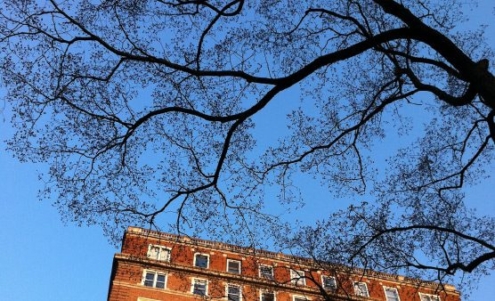
Patricia Saraiva has captured this tension beautifully in her work titled On the Streets of New York. She reminds us that the city is not just a collection of buildings, but a place where nature insists on its own space. Does this view change how you walk through your own neighborhood?