The Architecture of Rest
In the dense, vertical logic of the modern metropolis, every square inch of ground is contested. We design our cities for flow, for the rapid movement of capital and bodies, treating the street as a corridor to be traversed rather than a room to be inhabited. Yet, the human body has its own stubborn requirements. When the relentless pace of the urban machine becomes too much, the city is forced to yield. A makeshift bed on a concrete ledge or a quiet corner in a transit hub becomes a radical act of reclamation. It is a temporary pause in the choreography of production, a moment where the individual asserts their right to exist outside of the city’s demand for utility. We often overlook these quiet pockets of stillness, seeing them as obstructions rather than essential human geography. But look closer at the edges of the thoroughfare; what does it say about our collective priorities when the only place to find peace is in the margins of the public sphere?
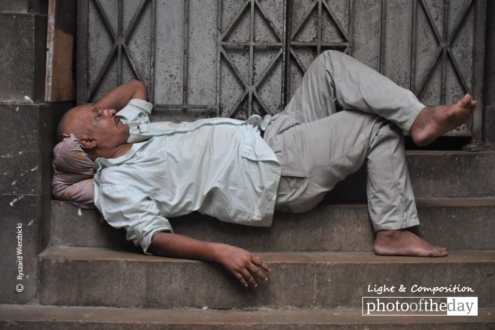
Ryszard Wierzbicki has captured this tension beautifully in his image titled Mumbai Siesta. It serves as a poignant reminder that even in the most frantic urban centers, the need for rest remains a universal human constant. How much of our city is designed to welcome this rest, and how much is built to move us along?