The Architecture of Memory
History is rarely a straight line. We prefer to imagine it as a path we walk, moving steadily from the past into the future, but it is more often a labyrinth of our own making. Think of the way we build our monuments: we stack stone and pour concrete to hold onto things that are already slipping through our fingers. We create spaces designed to make us feel small, to force a physical confrontation with the weight of what has been lost. There is a strange, cold comfort in these geometries. They do not offer answers; they only offer a place to stand while we grapple with the silence. When we walk into such a place, we are not just entering a structure; we are stepping into a deliberate echo. The walls rise up to meet our own internal shadows, and for a moment, the noise of the present is muffled by the sheer, unyielding presence of the past. If the stone could speak, would it tell us how to forgive, or would it simply remind us that we are still here, wandering?
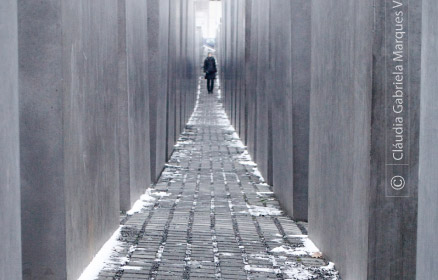
Cláudia Vieira has captured this heavy stillness in her image titled Holocaust Memorial. She invites us to walk through these concrete corridors and consider what it means to be held by the architecture of our own collective memory. Will you step inside?