
The Architecture of Adoration
We often speak of the city as a collection of buildings, roads, and transit lines, but the true geography of urban life is found in the spaces where we gather to lose ourselves. These venues are the modern cathedrals of belonging, temporary zones where the rigid hierarchies of the street are suspended. In the dark, shoulder-to-shoulder, we trade our individual identities for a collective pulse. It is a fragile, fleeting social contract. Who is granted the stage and who is relegated to the periphery? Who has the capital to occupy the front row, and who must rely on a distant, mediated view to feel part of the ritual? These gatherings reveal the invisible lines of access that define our society. We build these arenas to foster connection, yet they often mirror the very exclusions we try to escape. When the music stops and the lights return, the crowd disperses back into the grid, carrying the ghost of that shared intensity into a city that rarely offers such unity. What happens to the community when the spotlight fades?
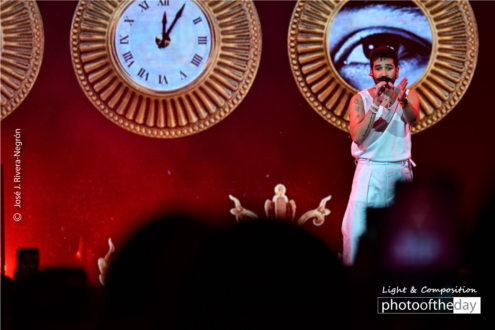
Jose Juniel Rivera-Negron has captured this dynamic in his work titled One Shining Star. He highlights the tension between the singular figure on stage and the collective energy of the crowd. Does this image reflect a space that belongs to everyone, or is it a temporary illusion of inclusion?