
The Architecture of a Splash
In the quiet hours of the morning, when the house is still settling into its bones, I often find myself watching the kitchen tap. There is a rhythm to the drip—a slow, metronomic pulse that marks the passage of time in liquid increments. We rarely consider the physics of a collision until it is forced upon us. A single sphere of water, falling through the air, is a perfect, fragile vessel of gravity. When it strikes the surface, it does not merely disappear; it erupts. It creates a crown, a spire, a momentary sculpture that defies the very fluid nature of its existence. We spend our lives trying to hold onto things that are inherently fleeting, attempting to pin down the vapor of a memory or the exact shape of a passing mood. But perhaps the beauty is not in the holding, but in the sudden, violent grace of the impact itself. If we could see the world at the speed of a heartbeat, would we find that every ending is actually a complex, blooming beginning? What happens to the water once the crown collapses back into the dark?
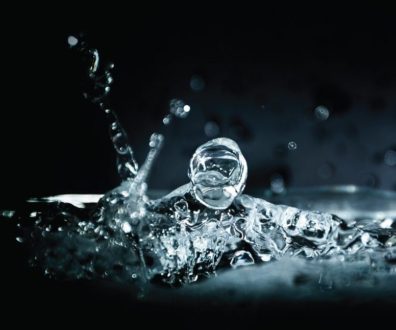
Rodrigo Luft has captured this precise, fleeting architecture in his image titled Playing with Waterdrops. It is a reminder that even the most mundane kitchen ritual holds a hidden, sculptural wonder if we are patient enough to wait for it. Does this image change the way you see the simple act of a falling drop?