Expedition Overview
Yogyakarta — "Jogja" to everyone who has spent time there — is the cultural heart of Java: home to the last active Javanese sultanate, the epicentre of batik and wayang kulit (shadow puppet) artisan traditions, the world's largest Buddhist monument (Borobudur, 30km away), and the world's largest Hindu temple complex outside India (Prambanan, 17km east). No city in Indonesia concentrates more photographic material — architecture, ceremony, craft, street life, and landscape — in a single accessible place.
Professor Nasrul Eam approaches Yogyakarta not as a collection of monuments but as a living city where the Javanese cultural tradition is not preserved behind glass but enacted daily in the Kraton ceremonies, the batik workshops of Kotagede, the wayang kulit performances, and the extraordinary street life of Malioboro. This three-day expedition navigates between the monumental and the quotidian, building a portrait of Yogyakarta that goes beyond the postcard.
Expedition Itinerary
Day 1: Kraton & Malioboro Street
Morning at the Kraton — the walled royal city within the city. The Sultan's palace has weekly ceremonial performances open to the public, and its internal courtyards are photographic environments of great beauty: carved teak, gamelan musicians, and palace guards in traditional dress. Afternoon on Malioboro, Java's most famous street — becak drivers, batik sellers, street food stalls.
The Goal of the Day: Palace documentary photography; the dense energy of a cultural street.
Day 2: Batik & Wayang Kulit Craft Documentation
A morning with a master batik craftsman in the Kotagede silver and batik district. The process — wax resist, dye, wax removal — creates natural documentary photography sequences. Evening at a wayang kulit performance (shadow puppet opera) — the puppeteer's hands, the shadow play on the screen, the gamelan accompanying it.
The Goal of the Day: Craft process photography; the challenges of performance photography in traditional setting.
Day 3: Borobudur Dawn & Prambanan Sunset
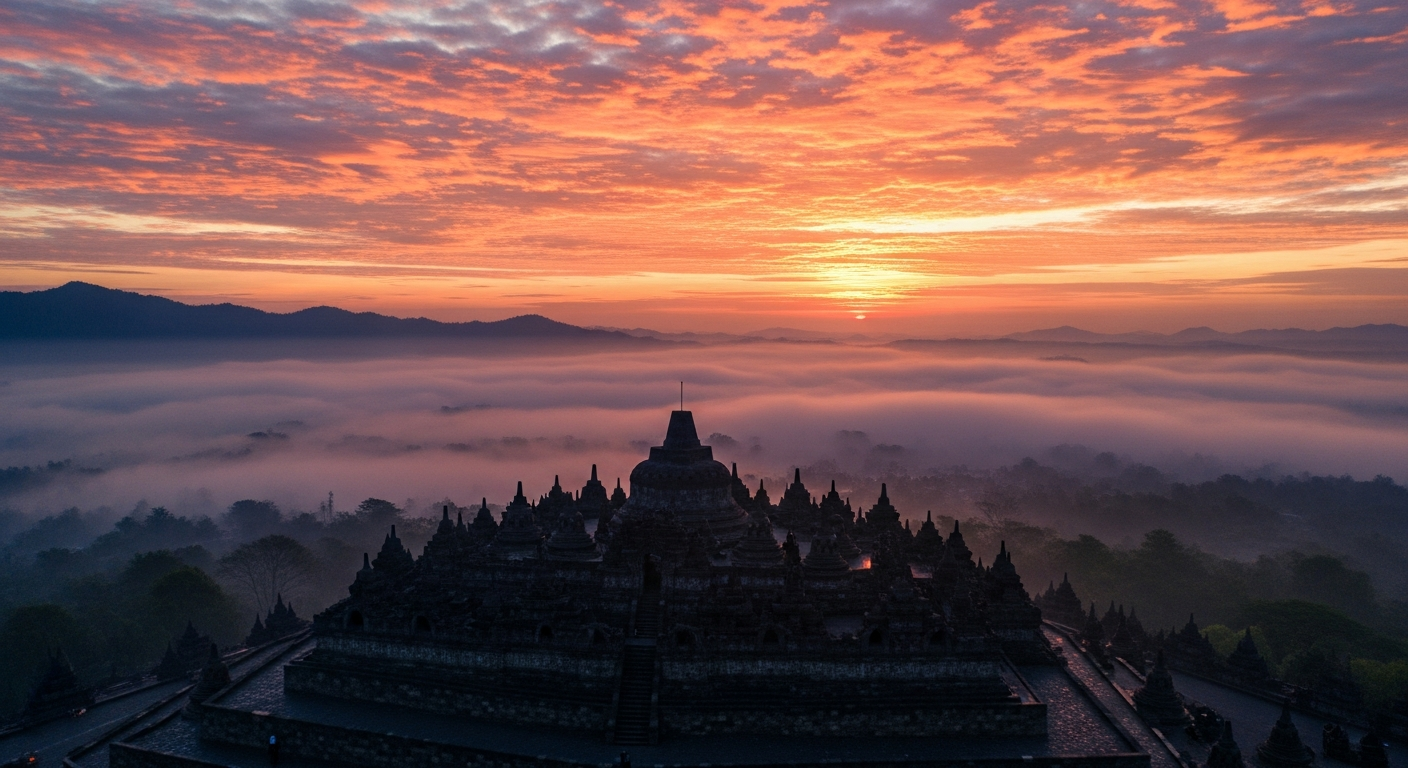
Pre-dawn departure for Borobudur. The stupa-covered upper platform in the first light — stupas dissolving into mist below, monks circumambulating — is the reason for the early start. Return and afternoon at Prambanan for the sunset photographs of the spires against the pink sky.
The Goal of the Day: Two of the world's great archaeological sites in their finest light within a single day.
Book Your Expedition
Note: Final price may vary based on specific expedition details and customizations.
Expedition Leaders
Professor Nasrul Eam is a seasoned explorer and visual storyteller who has spent over two decades traversing Asia’s diverse landscapes and cultures. As Dean of the Department of Art and Photography at Light & Composition University, he leads immersive photography expeditions to regions like the Himalayas, Sundarbans, and Bali. These journeys blend cultural exploration with hands-on learning, culminating in a complete photography diploma. With a portfolio of over 50 publications—including The Quintessence of Photography and Illuminating Nature—his work captures the profound beauty of everyday life. His background in advertising, linguistics, and visual arts enriches his mentorship, guiding participants to uncover compelling narratives through their lenses. Professor Eam’s expeditions are transformative experiences, inspiring photographers to engage deeply with the world around them.
Travel Information
Adisutjipto Airport has direct connections from Bali (1 hour), Jakarta (1.5 hours), and Surabaya (1 hour). Best season: April–October.
What to Bring
• Wide-angle for temple complexes and Kraton courtyards
• 50–85mm for street and craft portraiture
• 70–200mm for Prambanan spire details
• Tripod for pre-dawn Borobudur (long exposures in low light)