Expedition Overview
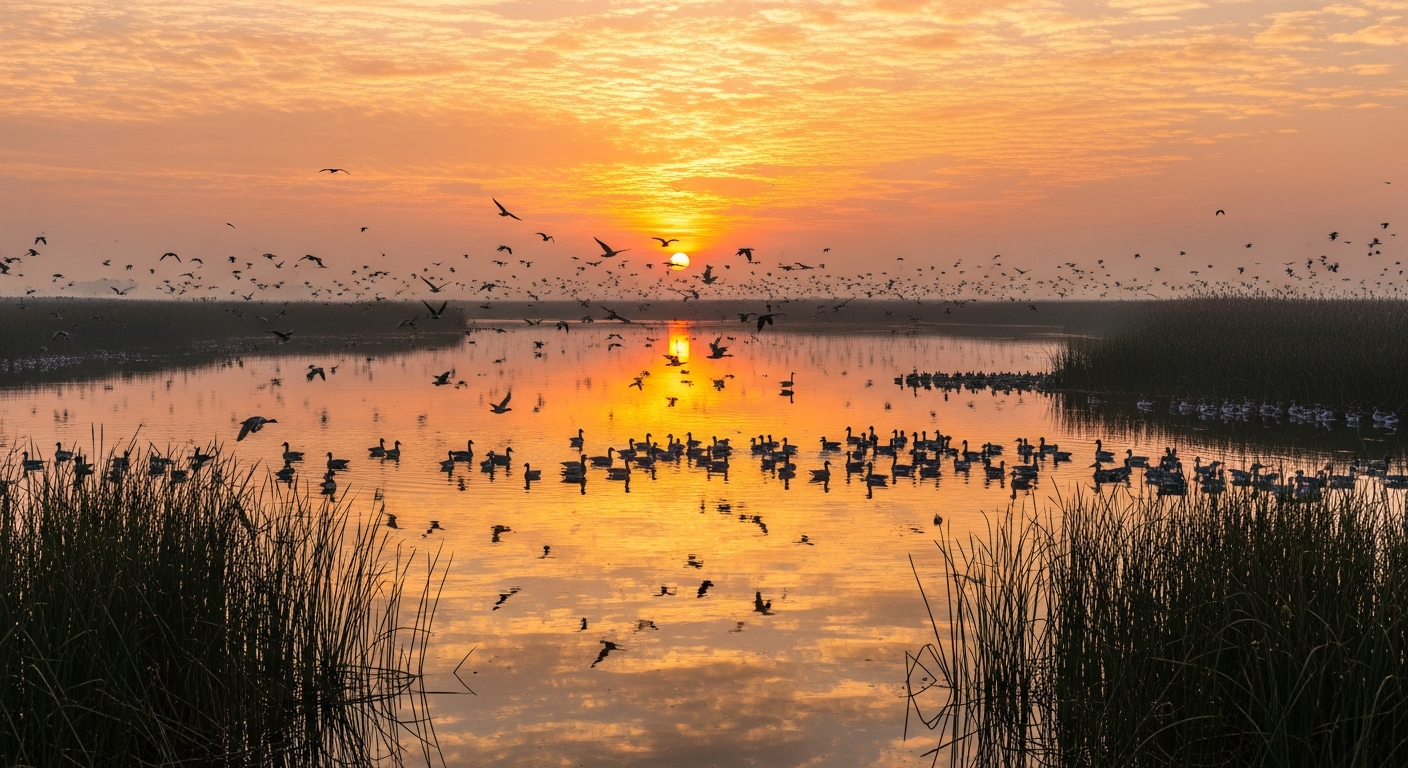
In winter, Tanguar Haor — a vast freshwater wetland in north-eastern Bangladesh — receives over 200 species of migratory waterfowl. From late November to February, the sky above the haor is in constant motion: flocks of thousands of duck, geese, and waders banking above the reed beds, their wings catching the low winter sun. The haor covers 100 square kilometres of open water fringed by swamp forest and fishing villages, experienced entirely from traditional wooden houseboats.
This is nature photography of the patient, observational kind: no hides, no baited positions, no guaranteed encounters — only the light, the birds, and the extraordinary stillness of a landscape where sky and its reflection in the water are sometimes indistinguishable. Professor Nasrul Eam, who has photographed Tanguar across seven winters, teaches the skills of anticipation and positioning that turn a flock in flight into a photograph rather than a document.
Expedition Itinerary
Day 1: Arrival at Sunamganj & First Evening on the Water
Board the houseboat at Sunamganj and transit into the haor. Late afternoon photography of the haor edge — fishing families, reed cutters, cattle ferried by canoe — as we move to our overnight anchorage in the open water.
The Goal of the Day: Documentary photography of wetland community life from a moving boat.
Day 2: Pre-Dawn Birds & Open Haor
At 4:30am on the bow as first light comes up. We spend six hours photographing the dawn light and bird activity — tern colonies, pied kingfishers hovering, cormorants drying wings, and vast wheeling flocks of duck at distance.
The Goal of the Day: Long-lens bird photography; working pre-dawn and early morning flat light.
Day 3: Swamp Forest & Return
The swamp forest fringe has a completely different character: intimate, dark, the water dappled with reflected canopy. We use the houseboat's small dinghy to enter the forest waterways, photographing root systems, reflections, and fisher families.
The Goal of the Day: Intimate nature photography; managing contrast between open sky and dark forest.
Book Your Expedition
Note: Final price may vary based on specific expedition details and customizations.
Expedition Leaders
Professor Nasrul Eam is a seasoned explorer and visual storyteller who has spent over two decades traversing Asia’s diverse landscapes and cultures. As Dean of the Department of Art and Photography at Light & Composition University, he leads immersive photography expeditions to regions like the Himalayas, Sundarbans, and Bali. These journeys blend cultural exploration with hands-on learning, culminating in a complete photography diploma. With a portfolio of over 50 publications—including The Quintessence of Photography and Illuminating Nature—his work captures the profound beauty of everyday life. His background in advertising, linguistics, and visual arts enriches his mentorship, guiding participants to uncover compelling narratives through their lenses. Professor Eam’s expeditions are transformative experiences, inspiring photographers to engage deeply with the world around them.
Travel Information
Sunamganj is 90 minutes from Sylhet by road. Sylhet has flights from Dhaka (45 min) and a 6-hour express train. Expedition season is strictly November–February. The houseboat provides all meals and basic comfortable sleeping quarters.
What to Bring
• Telephoto lens (300mm minimum, 500–600mm ideal for birds)
• Monopod or beanbag for boat-based long-lens work
• Warm layering (winter mornings on open water: 8–15°C)
• Waterproof outer layer
• Binoculars