Expedition Overview
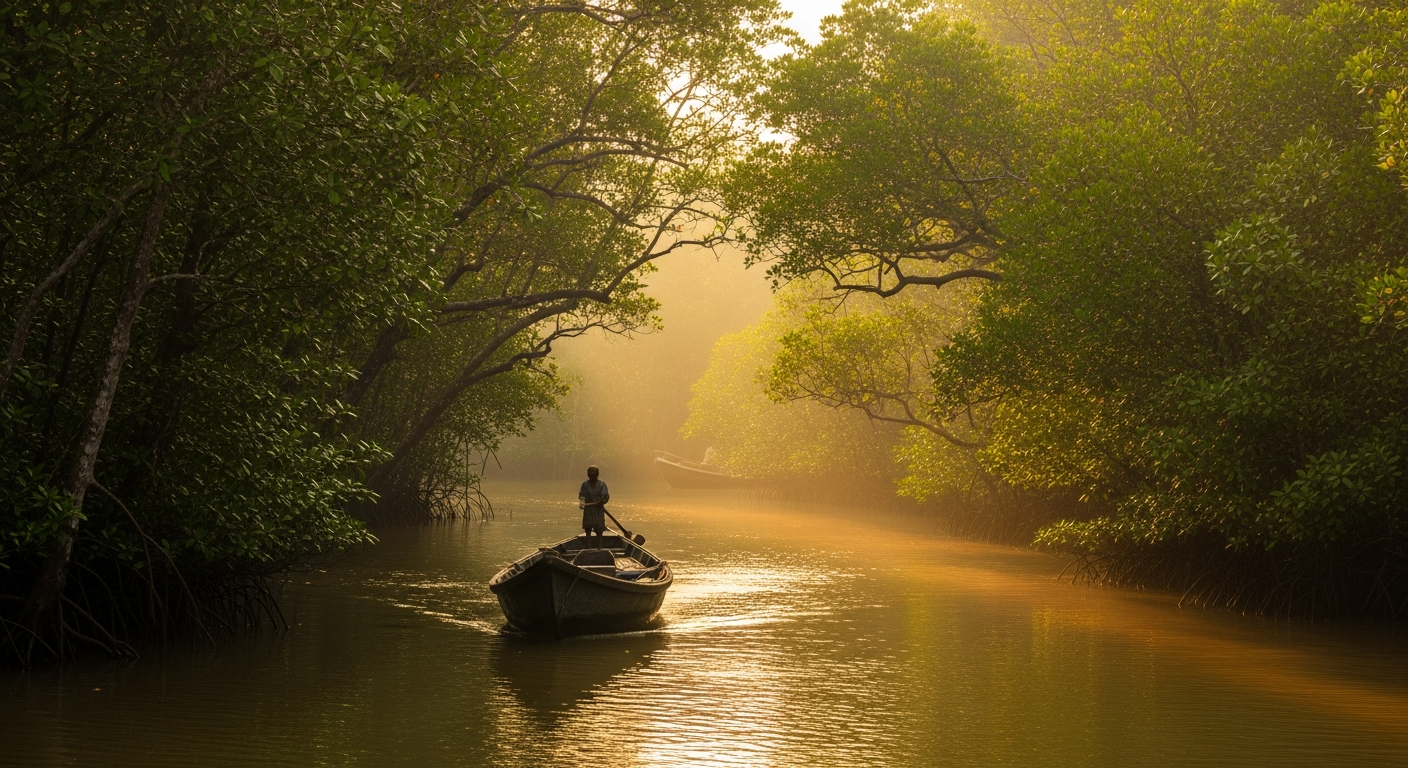
The Sundarbans is the largest mangrove forest on earth — a UNESCO World Heritage Site spread across the delta of the Ganges, Brahmaputra, and Meghna rivers. Over four days we navigate this labyrinth of tidal waterways entirely by boat, rising before dawn to photograph mist lifting off the river channels, kingfishers arrowing through grey light, and tiger footprints pressed into the mud at low tide.
Under Professor Nasrul Eam's guidance — he has photographed the Sundarbans across two decades — you develop the patience and technical skill that wildlife and nature photography in difficult, low-contrast conditions demands. You will work with long lenses from a stabilised boat, learn pre-visualisation in a rapidly changing environment, and come away with images most photographers never get the chance to make.
Expedition Itinerary
Day 1: Mongla & First River Transit
Depart Khulna by boat and enter the Sundarbans at Mongla. The river widens and mangroves close in as the city disappears. Afternoon photography of river life — cargo boats, fishermen casting nets, herons standing motionless on exposed roots.
The Goal of the Day: Calibrate to river-based photography; light reading from a moving platform.
Day 2: Kotka Wildlife Sanctuary — Deep Forest
Pre-dawn dinghy into Kotka. First light filters through the canopy as we position at the watch tower and along tidal channels. Spotted deer, kingfishers, sea eagles, and brahminy kites work the water all morning.
The Goal of the Day: Long-lens wildlife photography in low light from a moving boat.
Day 3: Hiron Point & Coastal Mangrove
The western reaches open to wide tidal flats. Enormous skies, vast mudflats at low tide, and the pneumatophore breathing roots of the mangrove create extraordinary graphic patterns. Sunset from the lighthouse is one of Bangladesh's most dramatic.
The Goal of the Day: Landscape composition at scale: open skies and tidal textures.
Day 4: Return & Portfolio Review
Final dawn shoot from the boat as we return upriver — golden light now familiar, framing instinctive. Extended group review of four days' work with Professor Nasrul Eam, identifying the strongest images from each participant.
The Goal of the Day: Editorial selection and portfolio distillation.
Book Your Expedition
Note: Final price may vary based on specific expedition details and customizations.
Expedition Leaders
Professor Nasrul Eam is a seasoned explorer and visual storyteller who has spent over two decades traversing Asia’s diverse landscapes and cultures. As Dean of the Department of Art and Photography at Light & Composition University, he leads immersive photography expeditions to regions like the Himalayas, Sundarbans, and Bali. These journeys blend cultural exploration with hands-on learning, culminating in a complete photography diploma. With a portfolio of over 50 publications—including The Quintessence of Photography and Illuminating Nature—his work captures the profound beauty of everyday life. His background in advertising, linguistics, and visual arts enriches his mentorship, guiding participants to uncover compelling narratives through their lenses. Professor Eam’s expeditions are transformative experiences, inspiring photographers to engage deeply with the world around them.
Travel Information
Khulna is connected to Dhaka by air (35 min) and overnight train. Visa on arrival for most nationalities. Best season October–March (20–28°C, low humidity). The monsoon season (June–September) brings extraordinary atmosphere but also extreme heat and challenging boat access.
What to Bring
• Telephoto zoom (100–400mm or 150–600mm) — essential for wildlife
• Weather-sealed camera body (high humidity)
• Polarising filter for river reflections
• Waterproof dry bags for all gear
• DEET insect repellent and anti-malaria medication (consult doctor before departure)
• Long-sleeved clothing