Scissor Shearing by Jose Miguel Albornoz
Captured during the traditional festival in Coyhaique, Chilean Patagonia, this image documents the intense, time-sensitive craft of sheep shearing using antique scissors. The photographer focuses on the raw, rural tradition where speed and precision define the winner. By isolating the shearer’s focused movement against the backdrop of a local contest, the image highlights the cultural heritage of the region. The technical execution, utilizing a moderate shutter speed to maintain clarity while capturing the kinetic energy of the task, elevates this scene from a simple event record to a compelling narrative of human skill and historical practice.
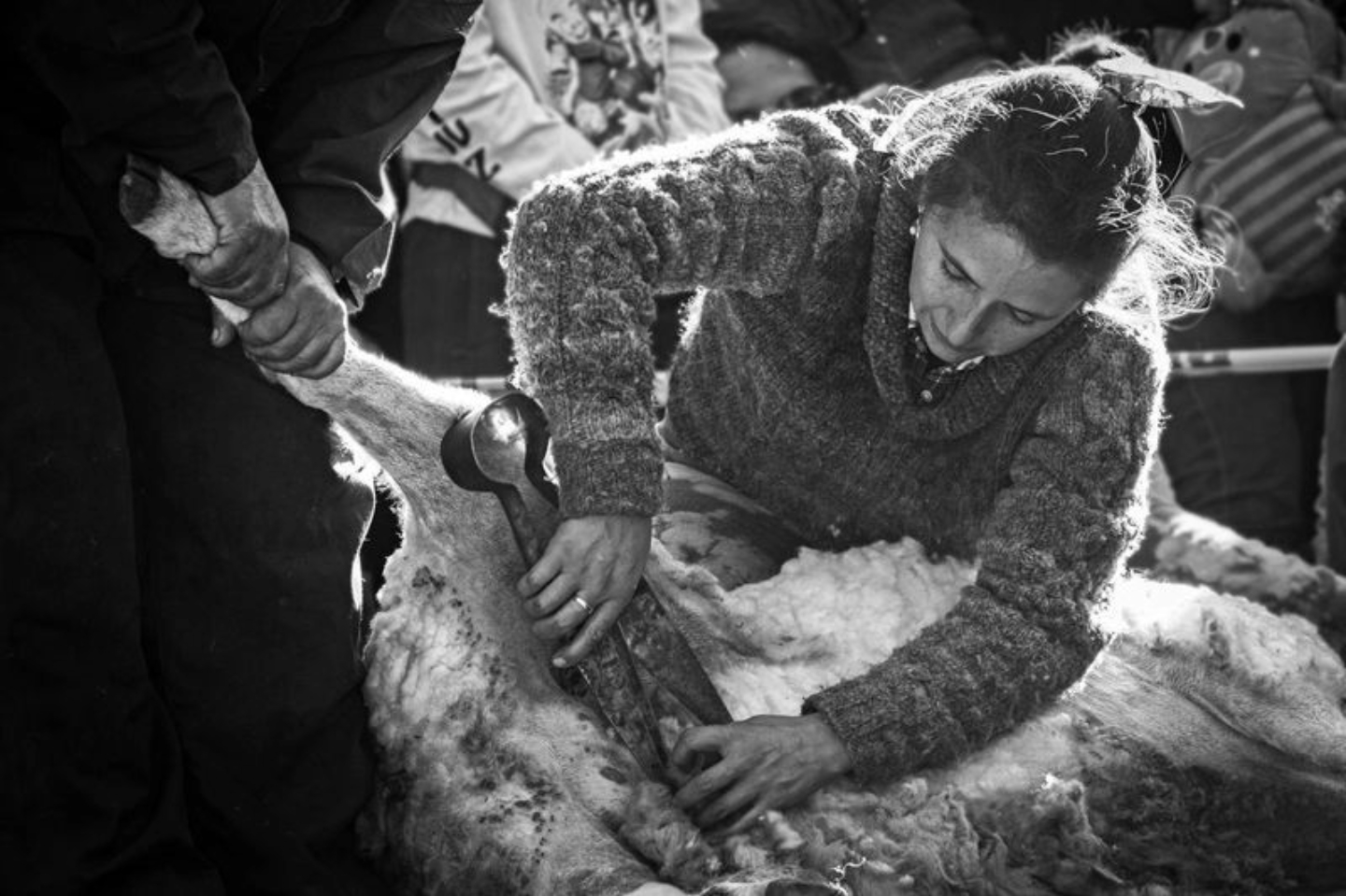
Exposure 1/90sec @ f/5.6 | ISO 100 | Focal Length 18-135mm
Jose Miguel Albornoz
Born in 1973, José Miguel Albornoz is a journalist and photographer based in Aysén, Patagonia, whose work is defined by a deep commitment to documenting the human experience. Educated at the Austral University of Chile, he specializes in street photography, travel, and nature, consistently seeking to preserve everyday moments for posterity. Albornoz believes that the most profound sensations are conveyed through intimate details and close-ups, a philosophy that allows him to transform current events into evocative visual memories that bring joy to the present.
Resonance Score Breakdown
Transparency Note: The resonance score (7.1/20) is calculated based on social engagement metrics collected before the award announcement.
Expert Photography Reviews · 7
The Rhythm of the Blade
Why do we feel the need to strip away the layers that define us, as if the essence of a thing only reveals itself once the exterior is discarded? There is a profound, almost sacred violence in the act of shedding.
Read the reflection →The Rhythm of the Blade
There is a quiet violence in the way we harvest what we need. It is a dance of necessity, a rhythmic negotiation between the hand and the living wool, where the blade becomes an extension of the pulse.
Read the reflection →Reviews & Comments
Share your thoughts about this award-winning photograph. Your reviews contribute to the community engagement score.
The shearer’s blades are mid-snip, suspended in that frantic, rhythmic dance of Patagonia. It’s raw. I love the tension in his knuckles; you can almost hear the wool hitting the floor. One tenth of a second later and the blur would have swallowed the precision. Albornoz caught the exact heartbeat of the contest. It’s not just a record of a festival; it’s the kinetic energy of a dying craft held perfectly, violently, still. Brilliant timing.
Before the eye identifies the shearer, a sudden tension tightens the chest. It’s the kinetic friction of steel against wool that triggers a phantom ache in my own wrists. I find myself holding my breath, syncing with the rhythm of those antique blades. When I return to this, I don’t see a contest; I feel the weight of a vanishing labor. It’s a visceral, rhythmic pulse that follows me home, echoing long after the screen goes dark.
We look at the shearer’s hands and we feel the rhythm of a life lived in Coyhaique. It’s not just about the wool; it’s about the silent conversation between man and blade. I’ve watched many portraits, but the intensity in his eyes—that quiet, focused stillness amidst the kinetic blur—truly moves me. He isn’t just working; he’s keeping a history alive. It’s a photograph that asks to be returned to, again and again.
You didn’t just document a contest; you captured the grit of a man’s hands against that wool. I can feel the tension in his grip, the way he’s fighting the clock and the animal. It’s raw, and it’s honest. Because you chose that shutter speed, the motion feels real, not frozen. I’ve spent enough time in the field to know that focus. You waited for the right heartbeat. There’s something genuine happening here. Nice work.
There’s a frantic, rhythmic honesty in those hands. You can tell the shearer isn’t performing for the lens; he’s lost in the muscle memory of the blade. I’ve spent enough time in rural corners to know that focus, and it’s beautiful. He’s not posing, he’s working. It makes me miss the smell of wool and dust. This face has a whole life in it, earned through years of quiet, steady labor in the Patagonian wind.
The shearer’s torso creates a rigid vertical axis, anchoring the chaotic kinetic energy of the wool. It’s a precise geometry. The negative space surrounding the blades provides the necessary tension to keep the frame from collapsing into mere reportage. I’m genuinely unsettled by how the blade’s arc bisects the picture plane so aggressively. It doesn’t just document a task; it forces a structural confrontation. The composition holds, though the periphery threatens to drift into noise.
The kinetic blur of the shears echoes the raw, tactile urgency found in early documentary work by Dorothea Lange, yet it’s distinctly modern. Albornoz captures the shearer’s focus with a precision that avoids the trap of mere ethnographic record. I’m genuinely moved by the tension between the antique tool and the digital sensor’s crispness. It’s a rare, honest conversation between heritage and the present. He’s found a rhythm here that feels both ancient and startlingly new.