The Shopkeepers by Argha Mitra
Captured in the scenic hill station of Darjeeling, this photograph documents a unique moment of human connection and economic cooperation. The photographer, experimenting with his first DSLR, was drawn to two independent shopkeepers who, despite their differences, merged their stalls to sell winter clothing, dry fruits, and spices. The image serves as a poignant study of diversity and shared livelihood. Its award-worthy quality lies in the candid observation of the subjects, where the photographer successfully balances the technical challenges of early camera mastery with a genuine, empathetic narrative of community life.
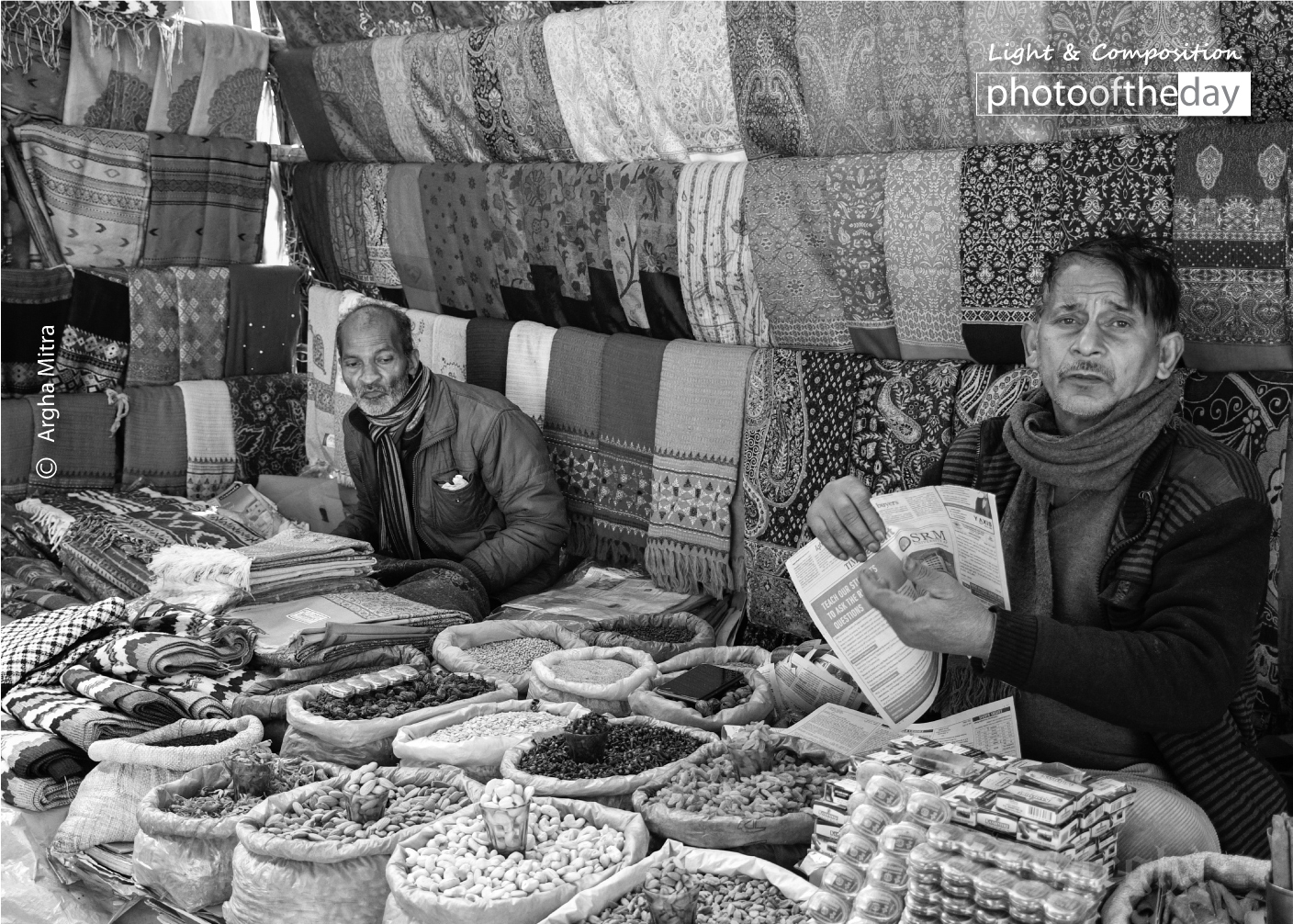
Exposure 1/250sec @ f/3.8 | ISO 800 | Focal Length 23mm
Argha Mitra
Born in Kolkata, India, Argha Mitra is currently based in Szeged, Hungary, from where he travels extensively to document the world. His photographic practice is defined by a deep interest in street photography, the expressions of diverse cultures, and the raw beauty of wildlife. Mitra frequently utilizes black and white aesthetics to emphasize his sophisticated play with light and composition, consistently seeking to capture precious, fleeting moments that reveal the human condition.
Resonance Score Breakdown
Transparency Note: The resonance score (8.4/20) is calculated based on social engagement metrics collected before the award announcement.
Expert Photography Reviews · 4
The Weight of Shared Thresholds
I keep a small, rusted iron key in a velvet pouch, though I have long since forgotten which door it once opened. It is heavy for its size, cold to the touch, and carries the faint, metallic scent of a house that no longer exists.
Read the reflection →The Architecture of Belonging
We are taught that survival is a solitary climb, a steep path where one must carry their own pack and clear their own way. Yet, look at the roots of the ancient banyan; they do not grow in isolation.
Read the reflection →Reviews & Comments
Share your thoughts about this award-winning photograph. Your reviews contribute to the community engagement score.
The frame’s geometry is cluttered, yet the vertical alignment of the stall supports provides a necessary, if fragile, architecture. It’s a chaotic intersection of textures where the dry goods and winter garments compete for visual dominance. The spatial tension between the two shopkeepers is almost lost in the noise. I’ve found myself frustrated by the lack of a clear fulcrum. It doesn’t quite hold, though the rhythmic repetition of the hanging merchandise offers a fleeting, disciplined reprieve.
Darjeeling’s air is thick here. Mitra caught these two men leaning into their shared space, a perfect alignment of commerce and camaraderie. It’s a quiet, honest frame. I love the way the spices pop against the woolens. Was it the decisive moment? Yes. One tenth of a second later and the gaze would have shifted, the connection lost. It’s rare to see such patience from a beginner. He didn’t blink. He was ready.
Watching these shopkeepers, I’m struck by the stillness. It’s rare to see such unforced intimacy in a street frame. Usually, photographers intrude, forcing a reaction, but here the subjects remain entirely within their own rhythm. It’s a relief. I’ve spent weeks in blinds waiting for a bird to forget I exist, and I recognize that same patience here. Mitra didn’t extract this moment; he earned it by simply becoming part of the scenery. It’s honest.
Darjeeling’s vernacular architecture is defined by these fragile, interstitial thresholds. Here, the shopfronts don’t just display goods; they negotiate the street’s slope, creating a makeshift datum where commerce meets the mountain air. I’m struck by how the light rakes across the hanging woolens, softening the harshness of the timber frame. It’s a messy, honest spatial collision. The frame omits the cold, but you can feel the weight of the structure pressing against their shared livelihood.