Fragrant Oils by Nilla Palmer
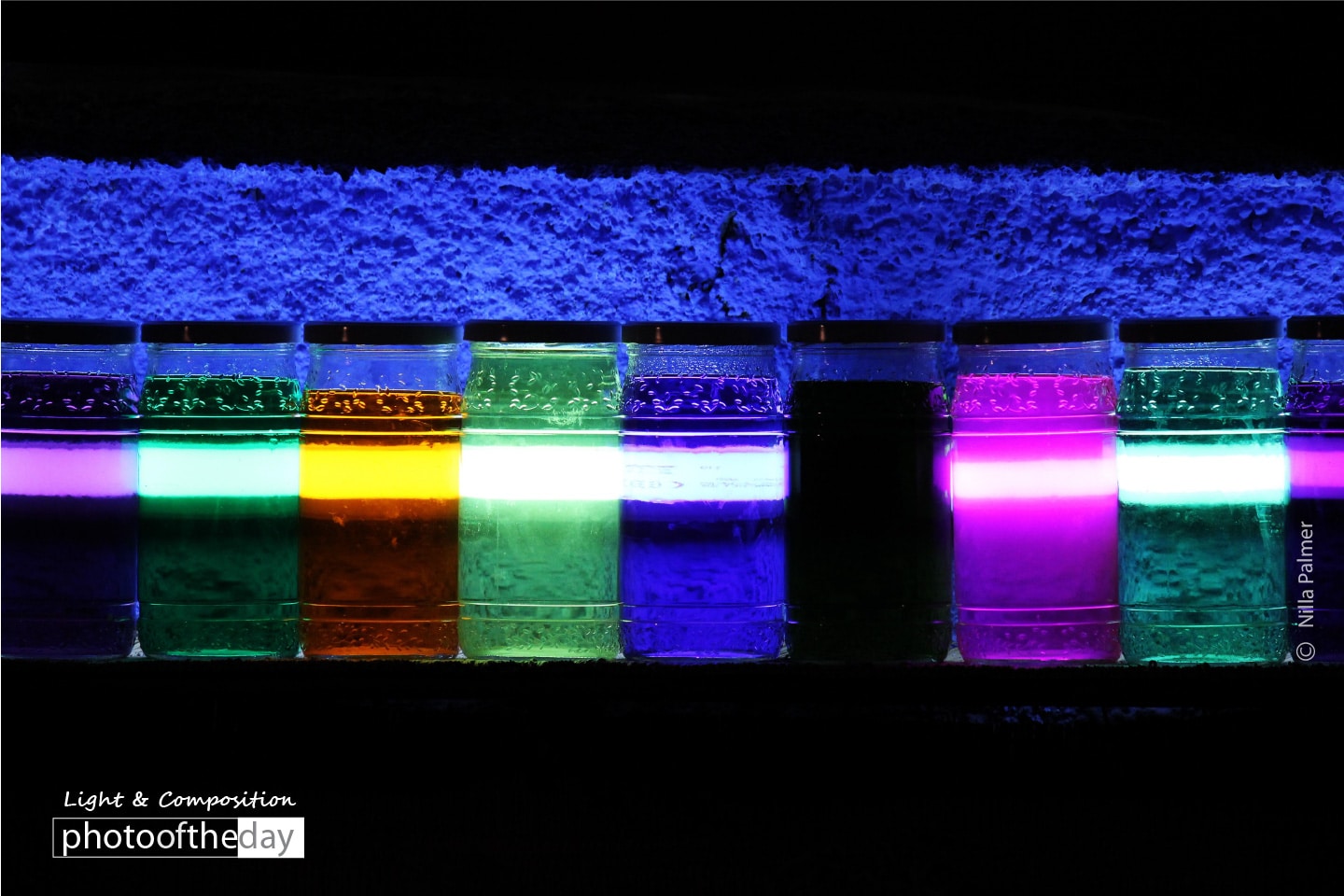
While wandering the twilight passageways of Chefchaouen, the photographer was drawn to the intoxicating scent of oils, leading to a hidden shop filled with vibrant spices and jars. To capture the scene without a tripod, the photographer utilized the shop's doorway for stability, framing a row of fluorescent-backlit jars. This technical choice allowed the luminous, warm glow of the oils to illuminate the interior walls, creating a striking contrast against the subdued dusk. The image is award-worthy for its masterful use of ambient light and its ability to transform a simple, quiet moment into a rich, sensory-driven narrative that transports the viewer directly into the heart of Morocco.
Nilla Palmer
Based in Brisbane, Australia, Nilla Palmer has cultivated a deep passion for photography over the past 27 years, evolving from early film formats to the precision of digital capture. Her work is defined by a spontaneous approach to storytelling, as she seeks to document fleeting moments that leave a lasting impression on the viewer. Through her evocative imagery, Palmer aims to inspire a sense of wonder and encourage global exploration, inviting audiences to discover the beauty of far-off lands through her lens.
Resonance Score Breakdown
Transparency Note: The resonance score (12.5/20) is calculated based on social engagement metrics collected before the award announcement.
Expert Photography Reviews · 8
The Amber Weight of Dusk
The air in the market stalls always tastes of dry earth and crushed seeds. It is a thick, golden flavor that coats the back of the throat, lingering long after the sun has retreated behind the stone walls.
Read the reflection →The Geography of Scent
Cities are often mapped by their transit lines and administrative boundaries, but they are truly defined by the sensory borders of their neighborhoods.
Read the reflection →Reviews & Comments
Share your thoughts about this award-winning photograph. Your reviews contribute to the community engagement score.
The glow of those oils is beautiful, but I’m left looking for the person behind the counter. Where is the shopkeeper? It’s a lovely study of light, yet it feels like a missed conversation. I’ve spent years in those Moroccan alleyways, and I know the stories hidden in the hands that pour those spices. This is a quiet room, but it’s empty. I’d trade that perfect technical exposure for one tired, honest smile.
The amber glow of these oils, reminiscent of the honeyed, viscous light Vermeer once trapped in a glass vessel, bleeds into the cobalt shadows of Chefchaouen with such aching, liquid intensity that I’ve found myself breathless. It’s a collision of Morandi’s muted dust and Turner’s furnace, where the warmth doesn’t just sit against the blue—it consumes it. One feels the heat radiating from those jars; it’s a sensory surrender I simply cannot resist.
We step into the twilight of Chefchaouen, drawn by the scent of oils. Nilla Palmer didn’t just capture jars; she listened to the hum of the shop. We see the fluorescent glow bleeding against the dusk, a silent conversation between light and shadow. It’s intimate, almost sacred. I feel the warmth of those spices on my own skin. It’s a portrait of a place that’s breathing, a quiet story told through the vessels of a stranger.
Chefchaouen’s blue walls usually swallow everything, but Nilla caught the light breathing. Those jars aren’t just objects; they’re glowing embers in the dusk. I love how the fluorescent hum cuts through the shadows. It’s a quiet, sensory hit. Did she nail the timing? Absolutely. One tenth of a second later and the glow would’ve flattened against the dark. She caught the pulse of the shop before the moment collapsed. It’s honest, sharp, and perfectly felt.
The threshold here acts as a framing device, grounding the viewer in the transition from the cool, blue dusk of the street to the interior’s amber warmth. By utilizing the doorway, Palmer captures the fenestration of the shelves as a rhythmic datum. I’m struck by how the fluorescent light flattens the jars, yet the glow against the textured plaster gives the space a visceral, tactile depth. It’s a rare, honest glimpse into the architecture of a moment.
Most entries in this category rely on heavy post-processing to force abstraction, but Nilla’s work succeeds through pure, tactile observation. By using the doorway as a makeshift tripod, she captured the viscous, glowing amber of those oils against the cool Moroccan dusk. It’s a rare, honest moment of light. I’ve stared at these jars for ten minutes, and I still feel the warmth of that shop. That’s why this will still matter in thirty years.
The frame’s geometry relies on the verticality of the jars to anchor the chaotic light. It’s a rigid grid that prevents the warm hues from bleeding into incoherence. The negative space at the edges provides the necessary breathing room for the composition to hold. I’m genuinely irritated by the soft focus at the periphery, yet the structural discipline of the backlit rows keeps the eye from wandering. It’s a precarious balance that barely succeeds.
Fluorescent light bleeds through these jars like a fever, yet it’s the encroaching dusk that holds the truth. Palmer doesn’t just frame a shop; she traps the silence of the Moroccan street against the frantic, golden heat of the oils. I’m unsettled by how the darkness refuses to retreat. It’s a heavy, suffocating beauty. When I look at these shadows, I don’t see a travelogue. I see the weight of time, pressing against the glass.
Thank you!
Wonderful Image!
Loving the contrast in colors! Nice one Nilla
Amazing colours!
Wow!!!