Leave a Reply
Want to join the discussion?Feel free to contribute!

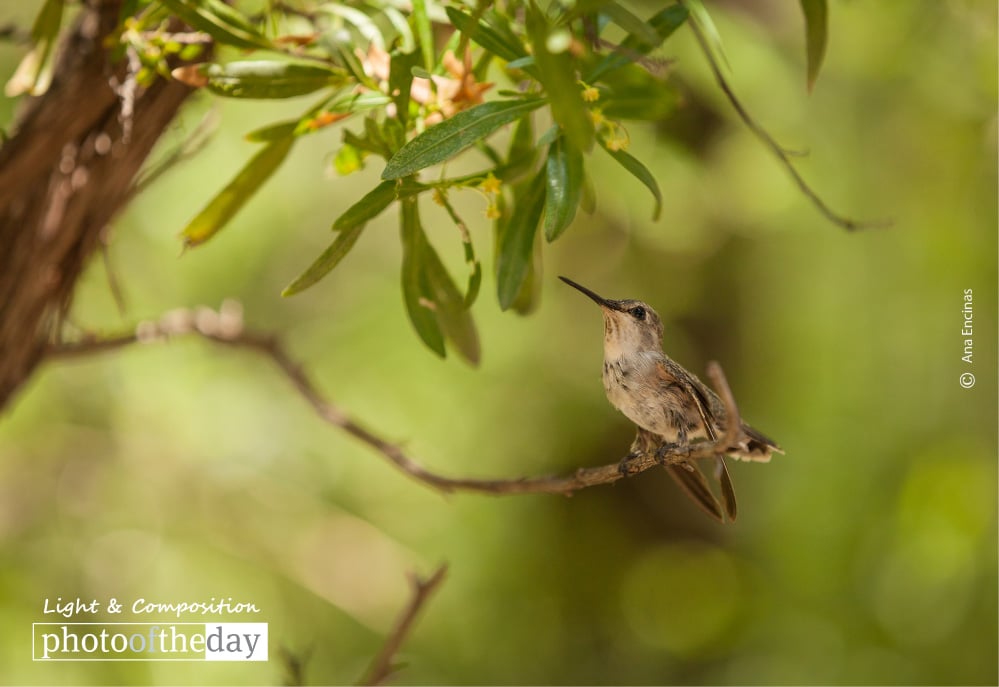
Captured at the Sonora Arizona Desert Museum in Tucson, this photograph celebrates the delicate beauty of a hummingbird. The photographer exercised immense patience, embracing the silence and stillness required to observe these tiny, peculiar creatures in their natural environment. By waiting for the precise moment, the photographer successfully froze the bird's rapid motion, highlighting its intricate details and vibrant presence. This image is award-worthy for its technical precision and the photographer's ability to translate a fleeting, high-energy encounter into a serene and captivating portrait of nature.
Born in Hermosillo, Mexico, Ana Encinas has nurtured a lifelong passion for photography that blossomed after she acquired her first DSLR in 2009. While she balances a successful career as an entrepreneur and marketing professional, she dedicates her leisure time to exploring the natural world through her lens. Her work focuses on landscapes and nature, reflecting a constant pursuit of technical mastery and the development of a distinct, personal artistic style.
Transparency Note: The resonance score (13.1/20) is calculated based on social engagement metrics collected before the award announcement.
There is a specific silence that follows the departure of something small and frantic. It is not a quiet of peace, but a quiet of sudden, hollowed-out air.
Read the reflection →I spent twenty minutes this morning trying to catch a stray moth that had found its way into my kitchen. It was frantic, throwing itself against the window, wings blurring into a grey haze.
Read the reflection →
 The Unfolding Season of Being
Share your thoughts about this award-winning photograph. Your reviews contribute to the community engagement score.