Symmetry by Shirren Lim
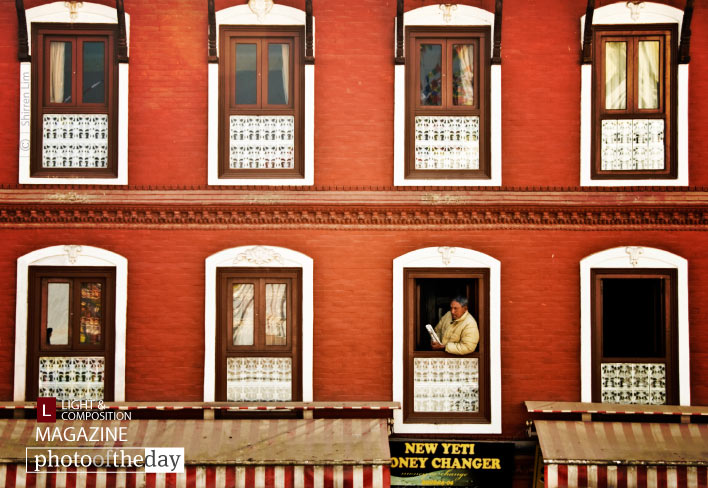
Perched atop the historic Boudhanath stupa in Nepal, the photographer captured a striking study in architectural geometry. The image focuses on a rhythmic sequence of windows, their rigid symmetry momentarily interrupted by the spontaneous appearance of a man peering out from within. This decisive moment transforms a static architectural study into a compelling narrative of human presence within a sacred space. The photograph is award-worthy for its masterful balance of pattern and spontaneity, demonstrating a keen eye for the interplay between structured environments and the unpredictable nature of life.
Shirren Lim
Born in Penang Island, Malaysia, in 1970, Shirren Lim is a Jakarta-based photographer who transitioned from photography as a casual habit to a profound professional passion. Her work is characterized by an intense, earthy aesthetic that prioritizes the raw sincerity of human expression and simple, impactful compositions. Inspired by the iconic documentary photography of Steve McCurry, she strives to capture evocative moments that resonate with global audiences, having seen her work featured in various international print and digital publications.
Resonance Score Breakdown
Transparency Note: The resonance score (12.3/20) is calculated based on social engagement metrics collected before the award announcement.
Expert Photography Reviews · 5
The Rhythm of Presence
There is a quiet music in repetition. When we walk past rows of stone or wood, we are often looking for the end of the path, forgetting that the beauty lies in the steady, rhythmic pulse of the journey itself.
Read the reflection →The Pattern of Us
I spent twenty minutes this morning trying to organize my bookshelf by color. It started as a simple task, a way to bring some order to a chaotic week. But as I lined up the spines, I realized how much I crave that kind of predictability.
Read the reflection →Reviews & Comments
Share your thoughts about this award-winning photograph. Your reviews contribute to the community engagement score.
1/60sec at f/6.3, ISO 100, 48mm. The D40X sensor isn’t forgiving, yet the exposure holds. Stopping down to f/6.3 was the right call; it keeps the architectural grid sharp without introducing diffraction. I’ve spent years staring at these sensors, and honestly, the clarity here is irritatingly good. You’ve balanced the geometry perfectly. The man in the window isn’t just a narrative device; he’s a technical necessity that prevents the frame from feeling entirely cold.
One suspects the light cooperated on the first attempt. It often does, for the patient. Lim’s geometry is tidy, but it’s that solitary face in the window that saves the frame from being mere wallpaper. I’ve spent enough hours shivering on stone ledges to know that catching a human element in such rigid architecture isn’t luck; it’s a long, tedious vigil. I find myself quite envious of the stillness required to pull this off.
We look at these rigid, rhythmic windows and expect only stone. But then, a man appears. It’s a quiet intrusion, isn’t it? He’s peering out from the silence of Boudhanath, and suddenly, the architecture breathes. I find myself holding my breath, wondering what he heard before he looked our way. It’s a beautiful, human interruption in a world of geometry. This is a photograph that asks to be returned to, again and again.
You caught the rhythm of those windows perfectly, but it’s the man that stops me cold. I’ve spent enough time in places like Boudhanath to know that stillness is rare. You didn’t just frame a building; you waited for the soul of it to look back at you. And that’s the difference. It’s not just geometry. It’s a quiet, breathing heartbeat in a stone wall. I felt a sudden, sharp ache of recognition looking at him.
Most architectural studies are cold, sterile exercises in geometry. I’ve seen thousands of them, and they usually vanish from memory by morning. What saves this shot isn’t the rhythm of the windows; it’s the man. That singular, startled face peering from the frame breaks the rigid pattern, grounding the stupa in reality. It makes me feel like I’m actually standing there, breathing the mountain air. That’s why it’ll still matter in thirty years.