Snack Time by Preeti Patel
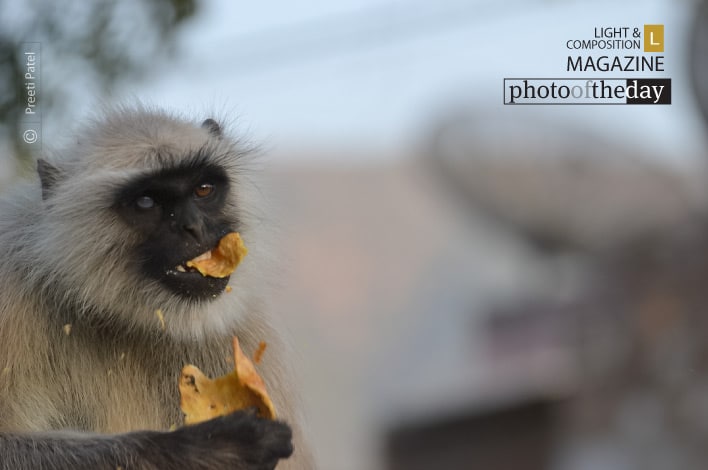
In the vibrant streets of Pushkar, India, the photographer captured an intimate encounter with a black-faced monkey perched atop a vehicle. The moment shifted from a quiet observation to a sudden, striking interaction when the animal leaped directly into the frame. The photographer was deeply moved by the monkey's unique features—specifically the visible cataract in its eye and a physical deformity in its hand—which transformed a simple wildlife shot into a poignant study of resilience. This image is award-worthy for its raw, empathetic perspective, turning a fleeting street-life encounter into a compelling narrative of beauty found in imperfection.
Preeti Patel
Based in Nasik, India, Preeti Vinod Patel balances a professional career as a high school principal with a burgeoning passion for photography. Originally finding solace in point-and-shoot travel photography, she transitioned to a DSLR to explore the diverse facets of the medium. She is particularly drawn to candid street life, where she seeks to document the complex emotions and unspoken stories etched into the faces of her subjects. For Patel, photography has evolved from a simple stress-relieving hobby into a lifelong pursuit of visual storytelling.
Resonance Score Breakdown
Transparency Note: The resonance score (13.5/20) is calculated based on social engagement metrics collected before the award announcement.
Expert Photography Reviews · 5
The Geometry of Scars
We often speak of wholeness as if it were a pristine, unbroken vessel, something untouched by the friction of living.
Read the reflection →The Roughness of Being
The smell of dry earth and sun-baked metal clings to my skin, a scent that speaks of long afternoons spent waiting for nothing in particular.
Read the reflection →Reviews & Comments
Share your thoughts about this award-winning photograph. Your reviews contribute to the community engagement score.
The dust of Pushkar settles, and there he sits. I’ve spent enough dawns waiting for wildlife to know that stillness is a conversation. Preeti caught him in a moment of quiet grace, despite the cataract clouding his gaze and that twisted hand. It’s haunting. Looking at his face, I feel a sudden, sharp ache for all the broken things that still find a way to eat, to live, to simply be in the light.
Most wildlife shots are forgettable, but this one sticks. Of the thousands I’ve reviewed, few capture the visceral reality of survival like this monkey’s clouded eye. It’s the deformity in the hand that stops me cold; it forces you to acknowledge the animal’s struggle rather than just its charm. I’ve seen countless street portraits, but this raw, unflinching focus on imperfection is why we’ll still be looking at this in thirty years. It’s hauntingly human.
The cataract in that eye isn’t a flaw; it’s a veil between worlds. Patel captures the monkey’s leap, but the true weight lies in the shadows clinging to those deformed fingers. It’s a brutal, honest geometry. I’ve stared at this frame for an hour, and I’m unsettled by how the darkness refuses to soften the creature’s struggle. It doesn’t invite our pity. Instead, it demands we acknowledge that existence, even in Pushkar, is a jagged, beautiful resistance.
The frame’s geometry is precarious. The monkey’s diagonal trajectory slices the picture plane, creating a sharp tension against the static vehicle roof. It’s a violent disruption of space. While the cataract and deformed hand are noted, they’re mere details; the true weight lies in the animal’s aggressive proximity to the lens. I’m unsettled by the lack of breathing room. It doesn’t offer comfort, yet the structural discipline demands a grudging, cold respect.
At f/5.3, the focal plane is razor-thin, isolating the monkey’s ocular opacity with clinical precision. That cataract isn’t just a detail; it’s a refractive anomaly rendered with haunting clarity. I’m genuinely moved by how the lens resolves the texture of the damaged hand against the chaotic Pushkar bokeh. It’s a rare moment where the diffraction limit doesn’t soften the subject’s struggle. You’ve captured the biology of resilience, and frankly, it’s a beautiful, optical triumph.