The Architecture of the Wild
We often speak of the city as a human construct, a rigid grid of concrete and glass designed to contain our ambitions. Yet, we forget that the city is merely one layer of a much older, more complex geography. We draw lines on maps and call them borders, but nature does not recognize our zoning laws or our property deeds. There is a persistent, quiet resistance in the spaces we leave untamed—the margins where the wild continues to exist despite our best efforts to pave over the earth. When we look at these pockets of life, we are forced to confront our own displacement. We have built environments that prioritize efficiency and exclusion, often forgetting that we are part of a larger, interconnected ecosystem that thrives on diversity rather than uniformity. The true measure of a habitat is not how well it serves the dominant species, but how much room it leaves for the others to simply exist. Who are we to decide which inhabitants have a right to the landscape?
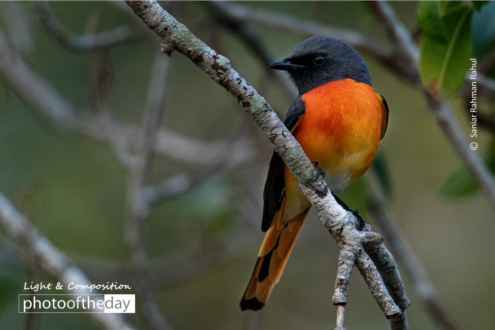
Saniar Rahman Rahul has taken this beautiful image titled Small Minivet. It serves as a reminder that even in the most remote corners of our world, there is a delicate, vibrant life that exists entirely independent of our urban structures. Does this glimpse into the wild make you feel more connected to the land, or more like a visitor?