The Weight of the Pause
I usually find the romanticization of the working man to be a tired exercise. We look for nobility in exhaustion, for poetry in the grit of a sidewalk, as if the struggle itself were a performance staged for our benefit. My first impulse was to resist this, to see it as just another attempt to find meaning in the mundane. I wanted to argue that a moment of rest is just that—a moment, devoid of the heavy significance we try to project onto it. But then I looked closer at the stillness. It wasn’t a performance. It was a quiet, singular reclamation of time in a place that demands constant motion. There is a specific kind of dignity in the way a person occupies space when they think no one is watching, a brief suspension of the grind where the self finally catches up to the body. It is not a grand statement, but it is a stubborn one. How much of our own lives do we spend waiting for the world to stop, just for a second, so we can remember who we are?
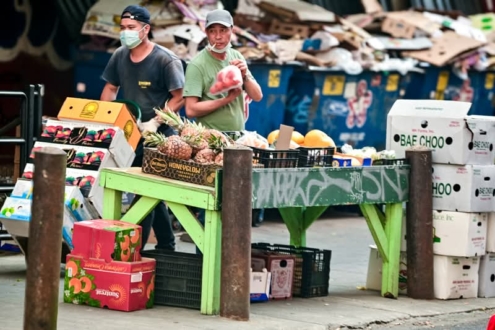
José J. Rivera-Negrón has captured this quiet defiance in his photograph titled Chinatown Rhythms. It serves as a necessary reminder that even in the busiest corners of the world, a person’s internal rhythm remains their own. Does this stillness feel like a relief to you, or does it carry the weight of the work left undone?