The Architecture of Consumption
We often mistake the objects we discard for the end of a narrative. In the urban landscape, the things we leave behind—the wrappers, the containers, the remnants of a quick lunch—are actually the most honest artifacts of our daily existence. They are the debris of convenience, marking the boundary between what we consume and what we discard. We build our cities around these cycles of consumption, creating spaces that prioritize the rapid turnover of goods over the slow, deliberate cultivation of beauty. Yet, there is a persistent human impulse to reclaim these industrial husks, to repurpose the detritus of the market into something that speaks of care rather than utility. When we place a living thing inside a vessel designed for mass-produced sugar, we are performing a small, subversive act of reclamation. We are forcing the rigid, branded geometry of the city to hold the fragile, organic chaos of the natural world. If the city is a document of our priorities, what does it say about us when we choose to nurture life within the hollow shell of our own waste?
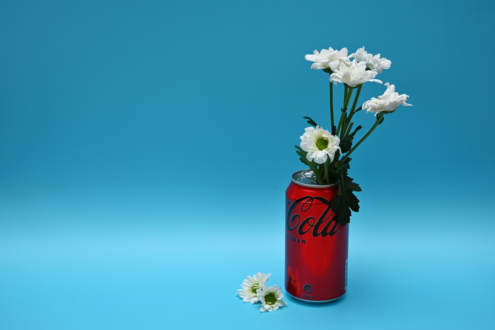
Leanne Lindsay has captured this tension beautifully in her image titled Sip of Daisies. By placing delicate flora within the stark, commercial frame of a discarded vessel, she invites us to consider the intersection of nature and our own consumption. How do you choose to repurpose the remnants of your own daily life?