The Architecture of Hiding
The Sundari tree, like all mangroves, manages the impossible: it thrives in the saline tension between land and tide, filtering salt through its roots to survive in an environment that would wither most other life. This is the mastery of the threshold. We often mistake visibility for existence, believing that to be seen is to be known, yet the most vital processes of the forest occur in the shadows of the canopy. There is a profound intelligence in concealment, a deliberate choice to exist within the margins of the foliage rather than against them. To be hidden is not to be absent; it is to be in total communion with one’s habitat. We spend our lives shouting to be noticed, fearing that if we are not perceived, we cease to matter. But what if our true strength lies in our ability to dissolve into the landscape, to become a quiet, essential part of the watershed?
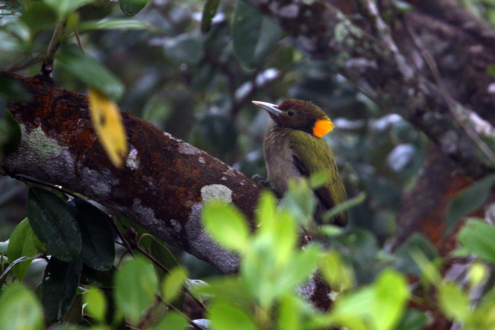
Saniar Rahman Rahul has captured this delicate balance in his image titled Greater Yellownape Concealed Among Sundari Leaves. It serves as a reminder that the most beautiful truths are often those that require us to look a little closer at the green silence. Does the forest feel more complete when we are not looking?