The Architecture of Silence
We often mistake the landscape for a backdrop, a static stage upon which the human drama unfolds. We treat the earth as a resource to be mapped, measured, and eventually conquered by the reach of our infrastructure. Yet, there are places that refuse to be domesticated, where the sheer scale of the geography reminds us that we are merely guests passing through a territory that does not require our presence to exist. In these spaces, the silence is not an absence of sound, but a heavy, ancient weight that humbles the ego. We build our cities to assert control, to carve out zones of comfort and predictability, but the periphery always remains. It is in the shadow of the unbuilt, the wild, and the unreachable that we find the true measure of our own smallness. When we step away from the pavement and the grid, we are forced to confront the reality that the world is not designed for our convenience. What happens to our sense of belonging when we are faced with a horizon that cannot be owned?
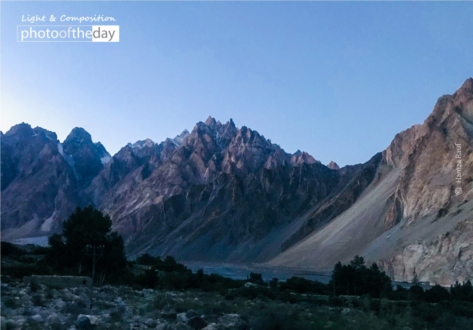
Hamza Rauf has taken this beautiful image titled The Passu Cones. It captures a moment of stillness against a landscape that dwarfs the very idea of human settlement. Does this vastness make you feel more connected to the earth, or more like a stranger?