The Architecture of Looking
We spend our lives peering through keyholes, convinced that the sliver of light we catch is the entirety of the room. We frame the world in narrow apertures, hoping that by limiting our sight, we might finally understand the depth of what stands before us. There is a quiet, mechanical patience in the way we choose our boundaries—a deliberate narrowing of the heart to keep the chaos of the horizon at bay. Perhaps we are all just looking for a way to hold the vastness of the world within a single, manageable circle. We curate our view, carving out a sanctuary of focus from the noise of the infinite, trusting that the edges we create are not walls, but windows. If we could see the world without these self-imposed frames, would the light become too heavy to carry, or would we finally recognize the shape of our own longing in the shadows? What remains when we stop looking at the object and start looking at the space it carves out of the dark?
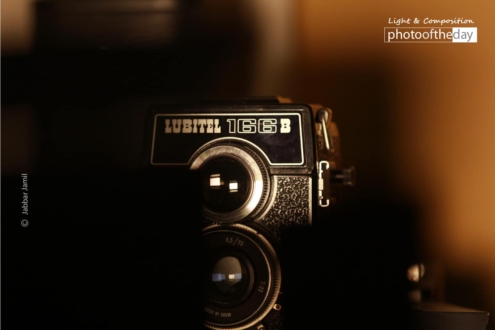
Jabbar Jamil has captured this delicate tension in his work titled Lubitel 166B. It is a meditation on the beauty of constraints and the way we choose to see. Does this frame feel like a restriction to you, or a way to finally see clearly?