The Weight of Memory
Seneca once remarked that we are like travelers who, having forgotten the purpose of our journey, become obsessed with the luggage we carry. We polish the leather, we check the latches, and we marvel at the craftsmanship of the vessel, all while the road ahead remains untraveled. It is a curious human tendency to anchor our identity in the objects we inherit, as if by holding the tools of those who came before us, we might somehow inherit their clarity or their vision. We treat these relics as talismans, believing that if we keep them pristine, we are preserving a piece of the past that would otherwise dissolve into the ether. Yet, the object is merely a witness. It has no memory of its own; it only holds the projection of our desire to remain connected to a time that has already slipped through our fingers. What happens to the weight of a life when the instrument that recorded it is finally set down?
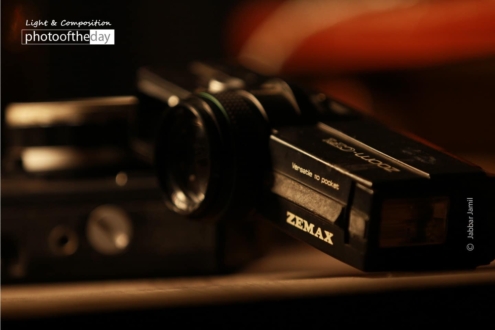
Jabbar Jamil has captured this quiet reverence in his work titled Zemax. He invites us to look closely at the physical vessel of memory, reminding us that even the most silent objects possess a history worth holding. Does the beauty of such a relic lie in its function, or in the stories it has kept for us?