The Architecture of Play
Public space is rarely neutral. It is a map of permissions, a landscape where the boundaries of who belongs are drawn by the presence of fences, the cost of entry, or the silent social codes that dictate who is allowed to linger. We often mistake the city for a collection of structures, but it is truly a collection of claims. When the formal rituals of the powerful conclude, the leftovers of their ceremonies—the remnants of a festival or the glow of a private devotion—are often left to the city’s margins. It is in these interstitial moments, in the quiet gaps between the official schedule of the metropolis, that the true inhabitants emerge to reclaim the ground. They do not ask for permission to inhabit the light; they simply find the warmth where it has been abandoned. The city is constantly being rewritten by those who find utility in the discarded, transforming a site of tradition into a theater of spontaneous joy. If the city is a document, what does it say about us when play is forced to happen in the shadows of someone else’s ceremony?
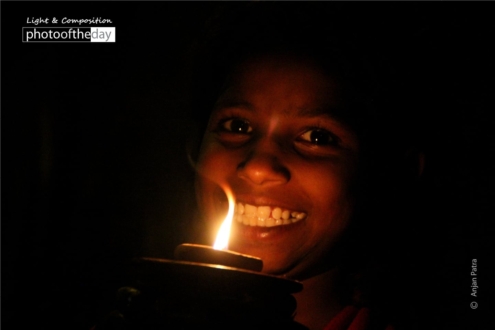
Anjan Patra has taken this beautiful image titled Light Means Happiness. It captures a fleeting moment where the city’s rigid geography gives way to the resilience of childhood. Does this scene reveal a city that is finally being shared, or one that is still waiting for its children to be invited in?