The Borders We Draw
We often mistake the edges of a map for the edges of life. We draw lines across wetlands and dams, declaring where one jurisdiction ends and another begins, assuming that these boundaries are absolute. Yet, nature operates on a different geography, one defined by migration, seasonal shifts, and the relentless pursuit of survival. When we build infrastructure, we carve out spaces that serve human utility, often ignoring the ancient, invisible corridors that existed long before the concrete was poured. We see a dam as a triumph of engineering, a static monument to our control over the landscape. But look closer at the margins of these human-made spaces. There is a constant, rhythmic negotiation between the built environment and the wild, a silent movement that refuses to acknowledge our fences. Who truly owns the space between the water and the wall? Is it the one who constructed the barrier, or the one who simply passes through it on a journey that knows no borders?
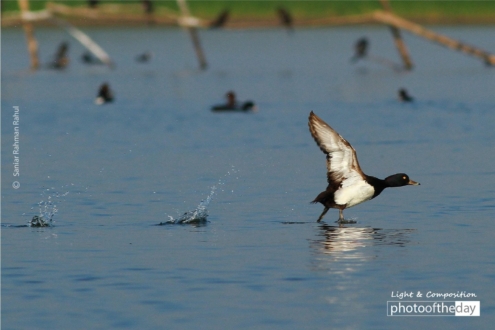
Saniar Rahman Rahul has taken this beautiful image titled The Tufted Duck. It captures a moment of transition that reminds us how much life persists on the periphery of our own designs. Does this creature belong to the dam, or is the dam merely a temporary waypoint in a much larger story?