The Weight of Iron
In the nineteenth century, the expansion of the rail network was often spoken of as a conquest of geography. We laid down iron veins across the soft, yielding earth, convinced that we were mastering the landscape, pinning it down so it could no longer shift beneath our feet. Yet, if you sit long enough by a rusted spur line, you realize the earth is merely waiting. It is patient. It allows the steel to sit, to oxidize, to surrender its sharp edges to the slow, relentless chemistry of rain and time. We build our monuments to progress, believing they are permanent, but they are only temporary interruptions in the long, quiet reclamation of the wild. The metal eventually remembers that it came from the ground, and the ground, in turn, begins to fold back over the tracks, erasing the path we were so certain we needed. What remains when the utility of a thing has finally withered away?
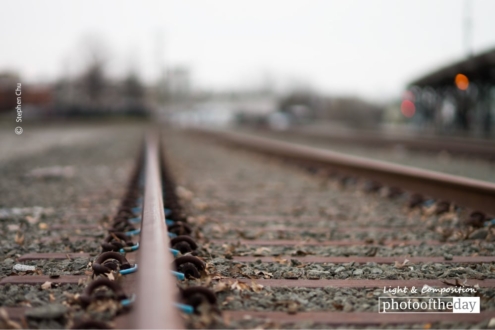
Stephen Chu has captured this quiet surrender in his photograph titled Trekkin. It is a meditation on the persistence of the forgotten, finding a strange, vibrant life amidst the decay of the rails. Does the iron feel lighter now that it no longer has anywhere to go?