The Weight of What Remains
Archaeologists often speak of the silence of objects. When a civilization retreats into the earth, it leaves behind a vocabulary of stone, clay, and bone—a language that no longer requires a speaker to be understood. We tend to think of history as a grand, sweeping narrative found in textbooks, but it is actually a collection of small, heavy things. A button, a shard of pottery, a fragment of a life once lived with the same urgency we feel today. These remnants do not ask for our pity; they simply exist, occupying space with a stubborn, quiet permanence. They remind us that time is not a river that washes everything away, but a sediment that settles, layer by layer, until the past becomes the very ground upon which we walk. We are constantly treading over the echoes of those who came before, unaware of the density beneath our heels. If the earth could speak, would it tell us that we are merely the next layer waiting to be buried?
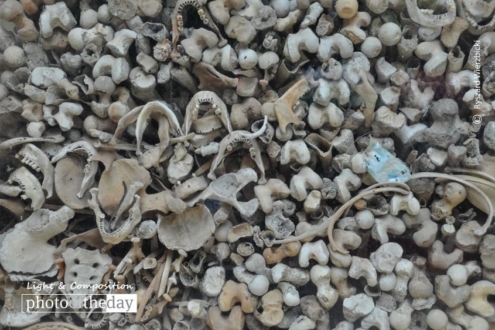
Ryszard Wierzbicki has taken this beautiful image titled Bones and Jaws. It invites us to stand still in the presence of a history that refuses to be forgotten. How do we carry the weight of such a memory?