
The Geography of Belonging
We often mistake the landscape for a backdrop, a static stage upon which the drama of human activity unfolds. Yet, geography is never neutral. Every ridge and waterway acts as a silent arbiter of access, dictating who can traverse a space and who is excluded by the sheer friction of the terrain. We look at these vast, open expanses and feel a sense of peace, but we rarely interrogate the labor required to inhabit them. Who maintains the path? Who is permitted to extract value from the earth, and who is merely passing through as a guest? The city and the wild are both documents of power, written in stone and sediment. We tend to romanticize the untouched, forgetting that every boundary is a social construct designed to keep some in and others out. When we gaze upon a horizon, we are not just seeing nature; we are seeing the limits of our own reach. If the land could speak, would it tell us that we are stewards, or merely trespassers in a place that has no name for us?
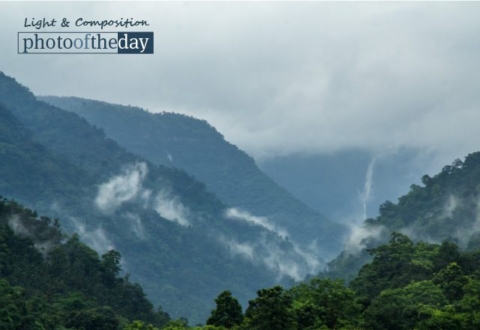
Tanmoy Saha has taken this beautiful image titled A Pleasant View. It invites us to consider the relationship between the observer and the land. Does this space belong to those who visit, or to those who live within its shadow?