The Architecture of Aftermath
We often mistake the city for its peak moments—the festival, the protest, the rush hour. We define a space by its capacity to hold a crowd, measuring its success by the density of bodies it can sustain. But there is a profound honesty in the quiet that follows the departure. When the music stops and the temporary structures are dismantled, the landscape reveals its true character. It is in these intervals of stillness that we see the friction between human desire and the environment. Who owns the sand once the party is over? Who is tasked with the labor of restoration, and who is permitted to simply walk away? A place is never truly empty; it is merely waiting for the next layer of human history to be written upon it. We build these stages for fleeting encounters, but the geography itself remains, bearing the silent, invisible weight of every footfall that came before. If we strip away the spectacle, what remains of the community that gathered here?
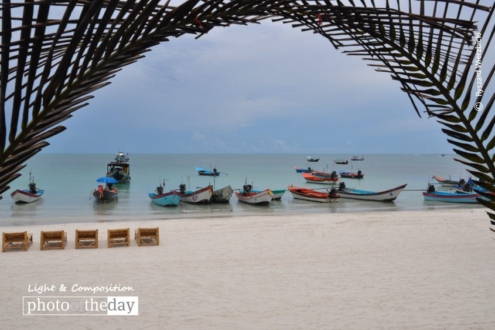
Ryszard Wierzbicki has taken this evocative image titled The Full Moon Party Beach – Gate. By documenting the space in its state of quiet transition, he forces us to consider the hidden geography of a site usually defined by its noise. Does the landscape belong to the reveler, or to the silence that follows?