The Weight of Stone
History is rarely a straight line; it is more like a sediment, layer upon layer of intention pressed into something solid. We walk past walls that have outlived their builders, never stopping to consider that the stone itself is a record of a specific, vanished urgency. To build a fortress is to declare a fear, a desire to hold back the tide of time or the reach of an enemy. Yet, the stone eventually forgets the hand that placed it and the reason for its own existence. It simply stands, absorbing the sun and the rain, becoming a silent participant in the daily lives of those who pass beneath its shadow. We are the fleeting ones, moving in quick, frantic bursts, while the architecture remains, anchored in a stillness we can barely comprehend. Does the wall feel the weight of the centuries, or is it merely waiting for the day it finally returns to the earth from which it was pulled?
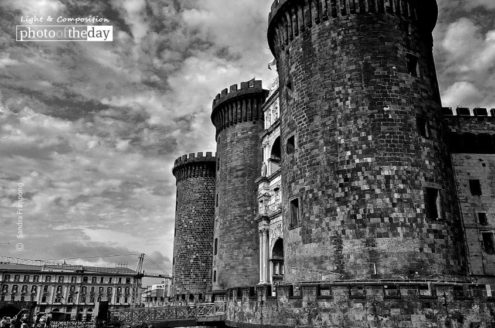
Sandra Frimpong has captured this enduring presence in her image titled Castel Nuovo. It serves as a reminder of how we live in the shadow of giants, both built and born. Does the permanence of stone make our own brief lives feel more fragile, or more precious?