The Architecture of Belonging
In the quiet corners of a crowded room, there is a geometry of touch that defies the noise of the world. We spend our lives building walls, defining the boundaries of where we end and another begins, yet there are moments when those borders soften. It is not a matter of proximity, but of gravity. A child clings to a shoulder, a hand rests against a cheek, and suddenly the chaos of the marketplace—the shouting, the commerce, the relentless motion of strangers—is rendered entirely irrelevant. We are wired to seek this anchor, this singular point of stillness in the middle of a storm. It is the oldest story we know: the instinct to shield, to carry, to be the landscape upon which another rests their head. We think we are moving through the world as individuals, but perhaps we are merely parts of a larger, breathing whole, tethered by the simple, heavy weight of someone else’s trust. What happens to the world when we finally let go of the need to be anywhere else?
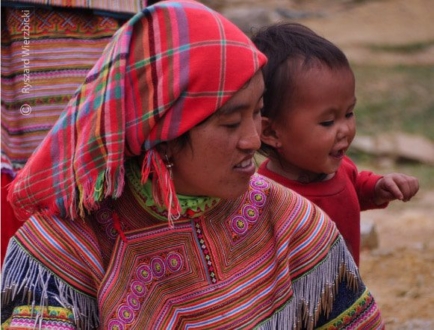
Ryszard Wierzbicki has captured this profound tethering in his work titled Hmong Mother and the Child. It is a gentle reminder of the quiet strength found in the midst of a busy life. Does this image make you think of the people who have served as your own anchor?