The Architecture of Play
There is a specific gravity to childhood that adults often misremember. We tend to view the early years as a state of aimless wandering, a soft-focus period of innocence before the hard edges of responsibility take hold. But watch a group of children in a space they have claimed as their own, and you will see something far more rigorous. They are not merely passing time; they are constructing a world. They build hierarchies out of whispers, establish borders with a glance, and turn the most mundane surroundings into a theater of high stakes. It is a serious business, this business of being young. They inhabit their environment with a total, unselfconscious ownership that we lose somewhere along the way, trading that deep, intuitive connection to place for the comfort of maps and schedules. We look at them and see play, but they are actually mapping the boundaries of their own existence, testing how much of the world they can hold before it slips through their fingers. What remains when the game finally ends and the water settles into silence?
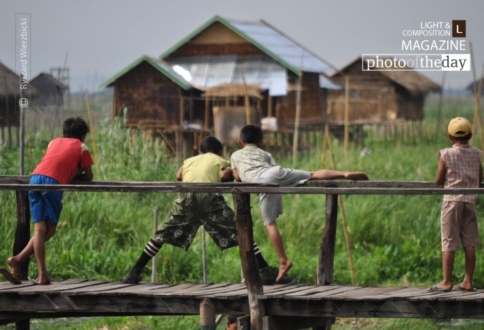
Ryszard Wierzbicki has captured this fleeting intensity in his image titled Inle Lake Hooligans. It serves as a gentle reminder of how we once claimed the world for ourselves, one curious moment at a time. Does it bring you back to a place you once called your own?