The Architecture of Starlight
In the middle of the nineteenth century, gas lamps began to rewrite the map of the night. Before that, darkness was a heavy, velvet curtain that fell across the world, dictating the rhythm of our sleep and the boundaries of our ambition. We lived by the sun, and when it retreated, we retreated with it. But then came the flicker, the hum, and finally the roar of the electric grid. We learned to build constellations of our own, stacking glass and steel until we had constructed a mountain range that never sleeps. There is a strange, quiet arrogance in this—the belief that we can hold back the tide of the void with a few thousand glowing filaments. We sit in the dark and watch the city burn with a cold, artificial fire, wondering if we are looking at a monument to our own ingenuity or merely a signal fire, burning brightly to prove that we are still here, still awake, and still afraid of the quiet. Does the light reach out to us, or are we simply reaching for the light?
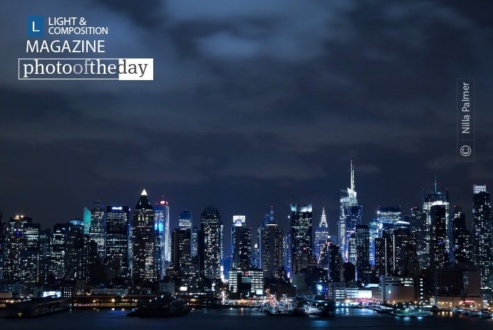
Bobi Dojcinovski has captured this exact tension in his work titled New York City by Night. It is a quiet study of how we illuminate our own existence against the vastness of the dark. Does this view make the city feel closer to you, or further away?