The Architecture of Absence
In the seventeenth century, astronomers spent their nights mapping the craters of the moon, convinced they were looking at vast, terrestrial oceans. They named these dark patches ‘maria’—seas—as if the lunar surface were merely a mirror of our own geography, waiting to be sailed. We have always had this compulsion to project our own familiar landscapes onto the unreachable. We look at the cold, cratered rock and see a face, a rabbit, or a promise of tides. It is a strange human habit, this need to domesticate the infinite, to bring the celestial down to a scale we can hold in our minds. We are terrified of the void, so we fill it with stories and names, turning the silent, orbiting stone into a companion. We watch it wax and wane, marking our own fleeting time against its ancient, indifferent rhythm. If the moon were truly empty, would we still look up with such persistent, quiet hunger?
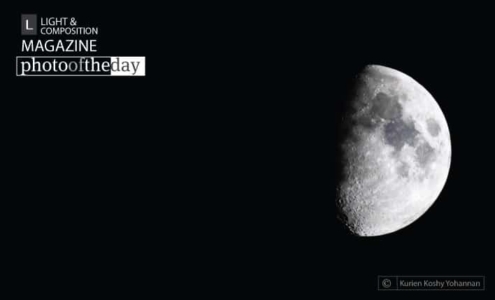
Kurien Koshy Yohannan has captured this beautiful image titled Lunar Phase. It serves as a stark reminder of how we track the light even when the world around us is shrouded in shadow. Does the moon seem more like a neighbor or a stranger to you tonight?