The Architecture of Drift
In the study of fluid dynamics, there is a concept known as the boundary layer—that thin, invisible region where a moving liquid meets a solid surface. It is a place of friction and slowing, where the water clings to the stone, hesitant to leave the only home it has ever known. We live our lives in a similar state of suspension, caught between the urge to flow forward and the deep, gravitational pull of the places that shaped us. To exist in a city built upon water is to acknowledge that stability is merely a polite fiction. We build our monuments on shifting silt, trusting in the permanence of brick and mortar while the tide quietly rearranges the foundations beneath our feet. We are always drifting, even when we believe we are standing perfectly still. If the ground itself is a conversation between the earth and the sea, how can we ever truly claim to be anchored to anything at all?
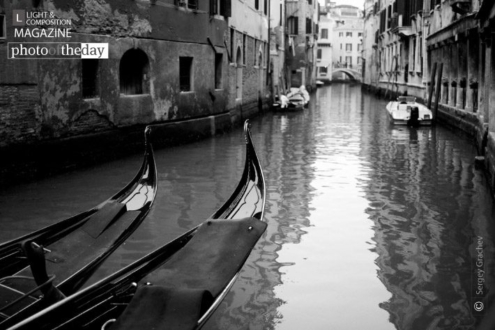
Sergey Grachev has captured this quiet instability in his image titled Venice. It serves as a gentle reminder that even the most solid histories are subject to the rhythm of the tide. Does the water hold the city, or is the city merely a guest of the sea?