The Architecture of Exchange
We often mistake the city for a collection of concrete, steel, and zoning laws. We analyze the grid, the density, and the infrastructure, forgetting that the true life of a neighborhood is found in the friction between people. It is in the informal, unscripted moments of trade and assistance that the social fabric is actually woven. When two people pause in a public space to share a gesture of care, they are not just transacting; they are asserting that the street belongs to them, not to the traffic or the authorities. These small, fleeting interactions are the primary building blocks of a resilient community. They represent a form of urban planning that happens from the ground up, where human dignity takes precedence over efficiency. When we look closely at these intersections, we see that the city is not a static map, but a living, breathing negotiation of who we are to one another. If the city is a document of our collective values, what does it say about us when we choose to stop and help?
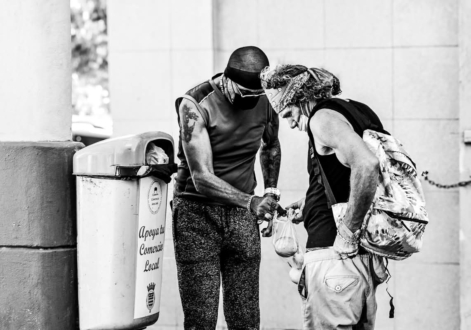
José J. Rivera-Negrón has captured this beautifully in his image titled Market Kindness. It serves as a reminder that the most vital infrastructure in any city is the empathy we extend to our neighbors. Does this scene reflect the kind of city you want to live in?