The Architecture of Play
My nephew Leo has a way of building that defies any instruction manual. He sits on the hardwood floor in the late afternoon, surrounded by a chaotic sea of plastic bricks, constructing towers that lean at impossible angles. Last Tuesday, I watched him spend an hour trying to balance a single red piece on a precarious ledge. He wasn’t interested in the finished model; he was entirely consumed by the geometry of the attempt. There is a quiet, serious dignity in the way children engage with their own small worlds. They don’t see clutter or mess; they see a landscape waiting to be defined by the way the sun hits the floorboards. It is a reminder that we once possessed the ability to find profound order in the simplest of materials, turning a pile of scattered parts into a kingdom of our own making. When did we stop seeing the potential in the debris of a quiet afternoon?
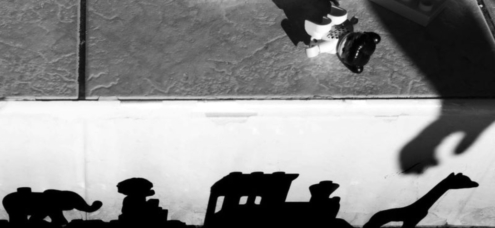
Klara Marciniak has captured this exact spirit of discovery in her photograph titled Lego. It turns a fleeting moment of domestic play into a study of light and structure that feels both timeless and intimate. Does this scene remind you of a project you once lost yourself in?