The Velocity of Belonging
Public space is rarely neutral. It is a negotiation between the infrastructure provided by the state and the spontaneous ways we claim it for ourselves. When we see a group of young people moving through a landscape, we are witnessing a reclamation of territory. They are not merely passing through; they are asserting their right to exist in the open, to occupy the margins of the riverbank, and to transform a transit route into a social theater. In the geography of our cities, the places where we are allowed to linger—without the pressure of commerce or the requirement of a ticket—are the true measures of our freedom. These pockets of leisure are where the rigid lines of urban planning soften, allowing for a fleeting, collective joy that defies the static nature of concrete and steel. Who is permitted to inhabit these spaces, and who is pushed to the periphery when the sun begins to set?
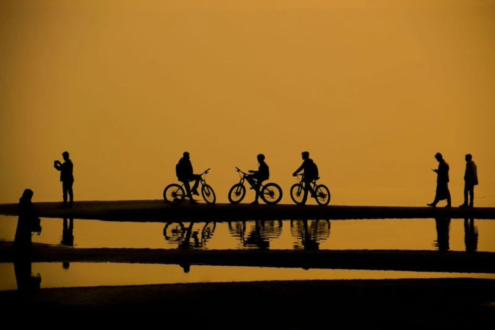
Syed Asir Ha-Mim Brinto has captured this spirit in the image titled The Golden Afternoon. It serves as a reminder that the city is most alive when it is reclaimed by those who move through it with purpose and community. How do you see your own neighborhood reflected in the way people gather in its open spaces?