The Geography of the Commute
We often talk about the city as a collection of landmarks, but the true document of urban life is found in the path between the workplace and the threshold of home. This journey is rarely a neutral act; it is a negotiation with the environment, a physical manifestation of one’s place in the social hierarchy. When we observe a solitary figure moving through a vast, open space, we are witnessing the intersection of individual endurance and the structural limitations of the city. Who built these roads, and for whom were they intended? Are they designed to facilitate the dignity of a person returning to their sanctuary, or are they merely conduits for the extraction of labor? Every silhouette against the horizon tells a story of belonging or exclusion, of a life that persists in the margins of a landscape that was never quite built with them in mind. The city is a map of our collective priorities, written in the soles of shoes and the length of the walk home.
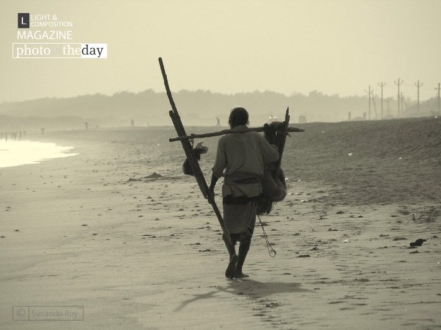
Sunando Roy has taken this beautiful image titled A Walk to Home. It captures the quiet weight of a daily return, reminding us to look closer at the people who navigate our shared spaces. Who is the city really for?