The Unmapped Commons
We often mistake the edges of our maps for the end of the world. We draw lines around cities, parks, and districts, assuming that what lies beyond these borders is merely empty space, a void waiting for human intervention to give it meaning. Yet, the most vital geographies are those that exist in the margins—the mudflats, the wetlands, and the shifting boundaries where the land refuses to be tamed by concrete or property deeds. These are the commons of the wild, places that operate on a rhythm entirely indifferent to our urban schedules. They remind us that a territory does not need to be occupied to be significant. When we look at these spaces, we are forced to confront our own displacement; we are the visitors here, passing through a landscape that has its own ancient, non-human social order. If we stripped away the infrastructure of our own making, would we even know how to navigate the terrain that remains? Who truly owns the ground that changes shape with every tide?
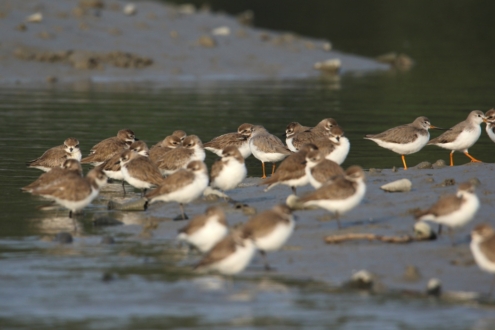
Saniar Rahman Rahul has captured this delicate intersection in the image titled Terek Sandpipers and Mixed Waders in Sundarbans. It serves as a stark reminder of the wilder, unscripted spaces that persist alongside our own. Does this view change how you perceive the boundaries of your own city?