
The Architecture of the Void
We build our cities with hard edges, prioritizing the permanence of stone and the efficiency of the grid. We designate spaces for transit, for commerce, and for the containment of nature, always assuming that the boundaries we draw are absolute. Yet, there is a profound tension between the structures we impose and the fluid, unscripted ways life actually occupies them. When we place living things into glass boxes, we are not merely observing them; we are asserting a hierarchy of visibility. We decide what is on display and what remains in the shadows, curating a version of reality that ignores the messy, pulsing autonomy of the subject. In these controlled environments, the architecture of the enclosure becomes more significant than the inhabitant itself. We are constantly creating containers for experiences, but who truly owns the gaze when the barrier between the observer and the observed becomes so thin? Is the city a place where we encounter the world, or merely a place where we watch it from behind a wall?
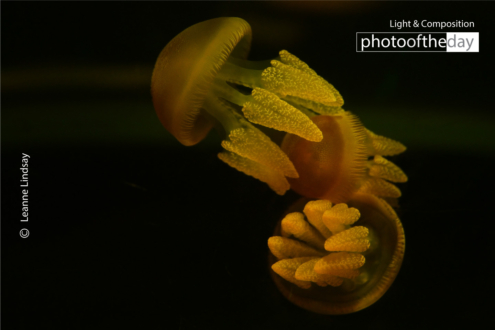
Leanne Lindsay has captured this tension beautifully in her image titled Silent Ballet. By focusing on the rhythmic drift within a confined space, she invites us to consider the boundaries we construct around the natural world. Does this display bring us closer to the wild, or does it simply remind us of our own desire to contain it?
 Night Lights by Olga Kulemina
 Okroshka by Natalia Zotova