The Geometry of Leisure
Public space is rarely neutral. It is a stage where the invisible hand of urban design meets the stubborn, persistent habits of those who refuse to be moved. We often prioritize the city as a machine for transit, a place to pass through, yet the most vital parts of our geography are the corners where people stop. When we carve out a patch of shade or a quiet stone ledge to hold a deck of cards, we are reclaiming the city from the developers and the traffic planners. We are asserting that the street belongs to the neighbor, the retiree, and the observer. These small, static clusters of human activity are the true anchors of a neighborhood; they represent a social contract that isn’t written in zoning laws but in the simple, repetitive act of showing up. Who is allowed to linger in the public square, and who is pushed along by the relentless demand for productivity?
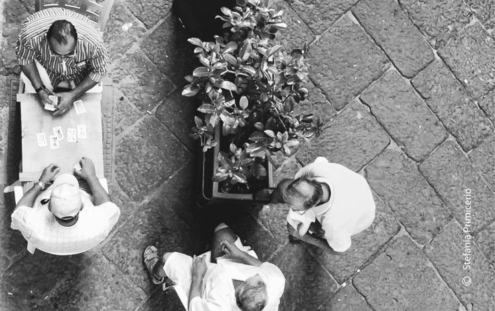
Stefania Primicerio has captured this quiet resistance in her image titled The Game. It serves as a reminder that the most significant urban infrastructure is the human connection found in the corners of our streets. Does your city provide enough room for people to simply exist together?