The Geography of Absence
We tend to define the city by its density, by the friction of bodies moving through transit hubs or the vertical accumulation of capital in glass towers. We measure progress by the intensity of human activity. Yet, there is a profound social weight to the places where we choose not to build, where the human footprint is intentionally erased by the elements. When we look at a landscape stripped of its usual markers—the street signs, the storefronts, the social hierarchies etched into the pavement—we are forced to confront the limits of our own dominion. Who is permitted to retreat into this silence? Is this stillness a luxury of the few, or a necessary reclamation of the wild for the many? The absence of people in a space does not mean the space is empty; it simply means we have stepped outside the document of our own making. We are left only with the architecture of the earth, waiting to see if we will ever learn to inhabit it without trying to own it.
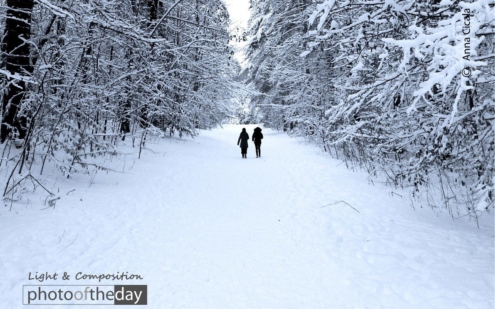
Anna Cicala has captured this quiet tension in her image titled Winter Wonderland. It invites us to consider what remains of our world when the noise of the city fades into the white. Does this landscape belong to everyone, or have we simply forgotten how to walk through it?